Why Summer Is Actually Worse for Your Health (And the 5-Step Reset I Use Every September)
This post is sponsored by Bluevua. All opinions are my own, and I only work with products I actually use.
This blog is based on a video from my YouTube channel. Prefer to watch? Click here to watch it.
Here's the thing nobody tells you about September: you were more active this summer, and you feel worse for it.
You hiked. You swam. You spent whole days on your feet at the beach. On paper, that's a great three months. So why do you feel flat, foggy, and weirdly behind — like you need a vacation from your vacation?
If you're searching "why am I so tired after summer," this is for you. The end-of-summer slump is real, it has almost nothing to do with willpower, and the fix is not a detox or a 30-day challenge. It's rebuilding structure — starting with the one habit that takes the least effort to restore.
Let me show you what actually happened, and the five steps I use every September to come back without starting from zero.
What summer actually takes from you
Your routine in May wasn't running on discipline. It was running on structure — a wake time you didn't think about, training days that didn't move, a lunch you made without deciding. Structure is what makes a habit feel automatic. It's the scaffolding underneath the behavior.
Summer takes that scaffolding apart one piece at a time. Travel. Houseguests. Kids home. A work schedule that either went dead or went insane. Daylight until 8:30 quietly pushing your bedtime later and later.
And here's the part that makes it sneaky: you were more active the whole time. More output, less recovery, for thirteen straight weeks. That's not health — in sports science that pattern has a name, overreaching, and it makes you flat rather than fitter.
Two things usually slip the most, and both are better studied than people realize:
Sleep.
Later nights and inconsistent wake times chip away at both the amount and the regularity of your sleep. A 2019 meta-analysis of 41 randomized controlled trials in Sleep Medicine Reviews (Zhu et al.) linked sleep restriction to measurable shifts in how the body handles energy and appetite. And a 2022 study in the Journal of the American College of Cardiology (Covassin et al.) found that restricting sleep was associated with increased visceral fat — the kind around your organs. Translation: the "I'll catch up in the fall" approach has a cost.
Hydration.
Hot days, travel, and more coffee than water add up. You don't have to be dramatically dehydrated to feel it. Studies on mild dehydration — Ganio et al. (2011, British Journal of Nutrition) in men and Armstrong et al. (2012, Journal of Nutrition) in women — found that even a small fluid deficit worsened mood, focus, and perceived effort. A 2015 review in Nutrition Reviews (Benton et al.) reached a similar conclusion. That "I'm just off today" feeling is sometimes a full glass of water.
The fix isn't a bigger effort. It's rebuilding the structure — starting with the input that takes the least willpower to restore.
The 5-step fall reset
One rule before we start: do not do all five at once. That's the mistake that torches every September. Start with Step 1, then pick one more. That's it.
Step 1 — Make the most basic input automatic
Action: Restart hydration first, because it's the lowest-willpower win you have.
Water is the easiest habit to rebuild because it requires almost no decision-making — if it's convenient. So make it convenient. A full carafe or bottle sitting where you'll see it beats a gallon jug you have to think about.
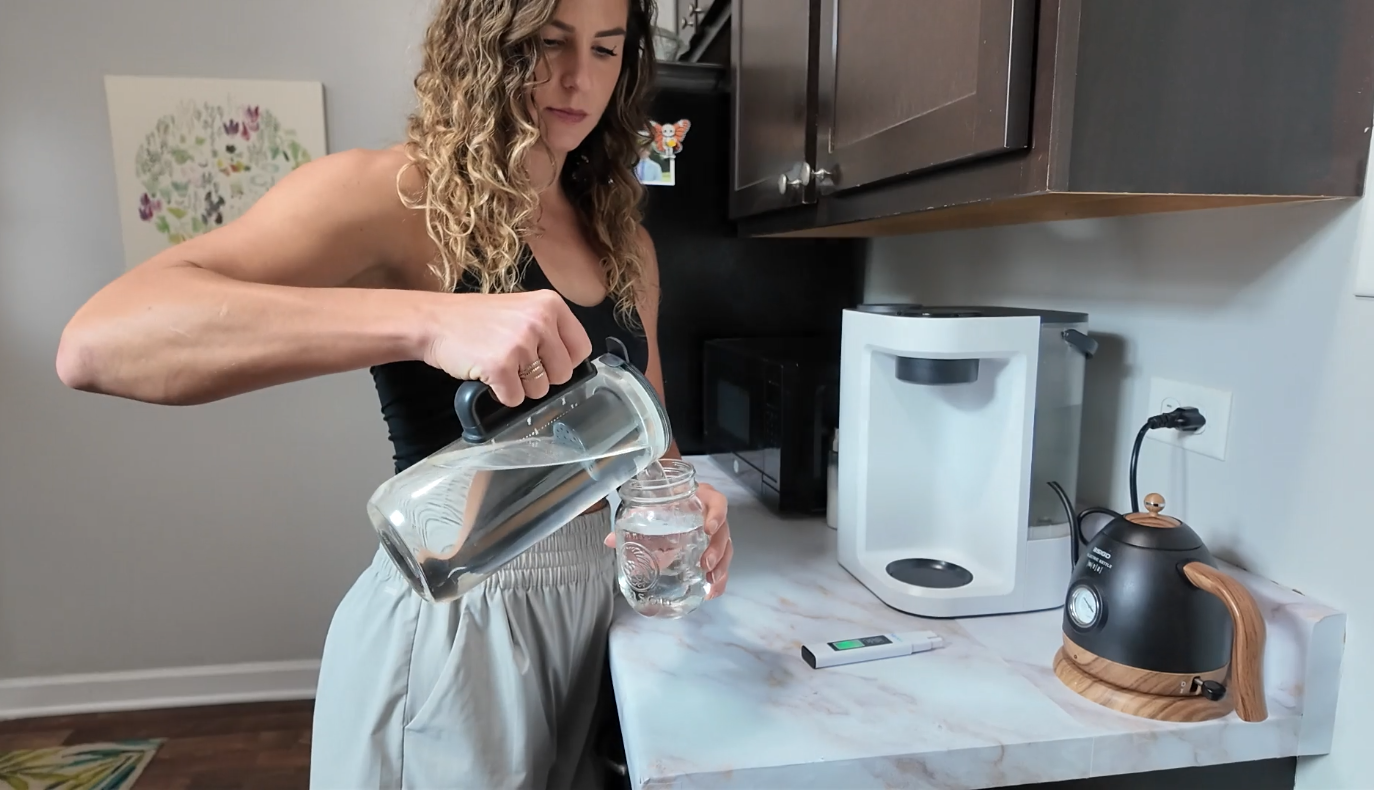
This is where the sponsor of today's video comes in, and it's genuinely the one thing on this list I've used the longest. I've had a Bluevua ROPOT-Lite countertop reverse-osmosis filter on my counter for close to two years. No plumbing, no install — it sits there, and filtered water is just there when I want it. Convenience is the whole point of Step 1, and removing the "is my tap water any good?" question is part of that.
In the video I run a TDS test — total dissolved solids — on my tap versus the filtered water, and the difference is large enough to see on the meter. TDS isn't a purity grade or a health verdict on its own (plenty of harmless minerals show up as TDS), but it's a useful, visible way to confirm the filter is doing something. If you want the full honest breakdown — including who does and doesn't need reverse osmosis — I wrote a nearly-two-year review of the ROPOT-Lite, and a broader pitcher vs. Berkey vs. reverse-osmosis comparison for renters so you can match the tool to your situation.
You can grab the ROPOT-Lite at — code VICTORIA15 takes 15% off. But the step matters more than the gear: put water where you'll drink it, and drink a glass before your first coffee.
Step 2 — Move your wake time, not your bedtime
Action: Anchor your morning, not your night.
Everyone tries to fix bad sleep by forcing an earlier bedtime, then lies there wide awake and frustrated. Your bedtime is mostly downstream of your wake time and your light exposure — those are the levers that actually move your internal clock.
So pick a consistent wake time and hold it, even on weekends, even when you're tired. Then get light into your eyes early — open the blinds, step outside with your coffee. Morning light is the strongest signal your circadian rhythm gets, and it does more to pull your bedtime earlier than willpower ever will. I go deeper on the grogginess-after-8-hours problem in this post on why you wake up tired and how to fix it.
Step 3 — Go back at half
Action: Restart training at half of what you think you can do.
The urge in September is to go back to your May workload immediately to "make up for it." Don't. You've had thirteen weeks of high output and low recovery — your body needs an on-ramp, not a cliff.
Cut the volume in half for the first week or two. An easy walk, some light mobility, one unimpressive session. It should feel too easy. That's the point — you're rebuilding the habit and the consistency first, and letting intensity come back once the routine is stable. Deliberately unimpressive beats ambitiously abandoned.
Step 4 — Put two meals on autopilot
Action: Pick two meals you can repeat without deciding.
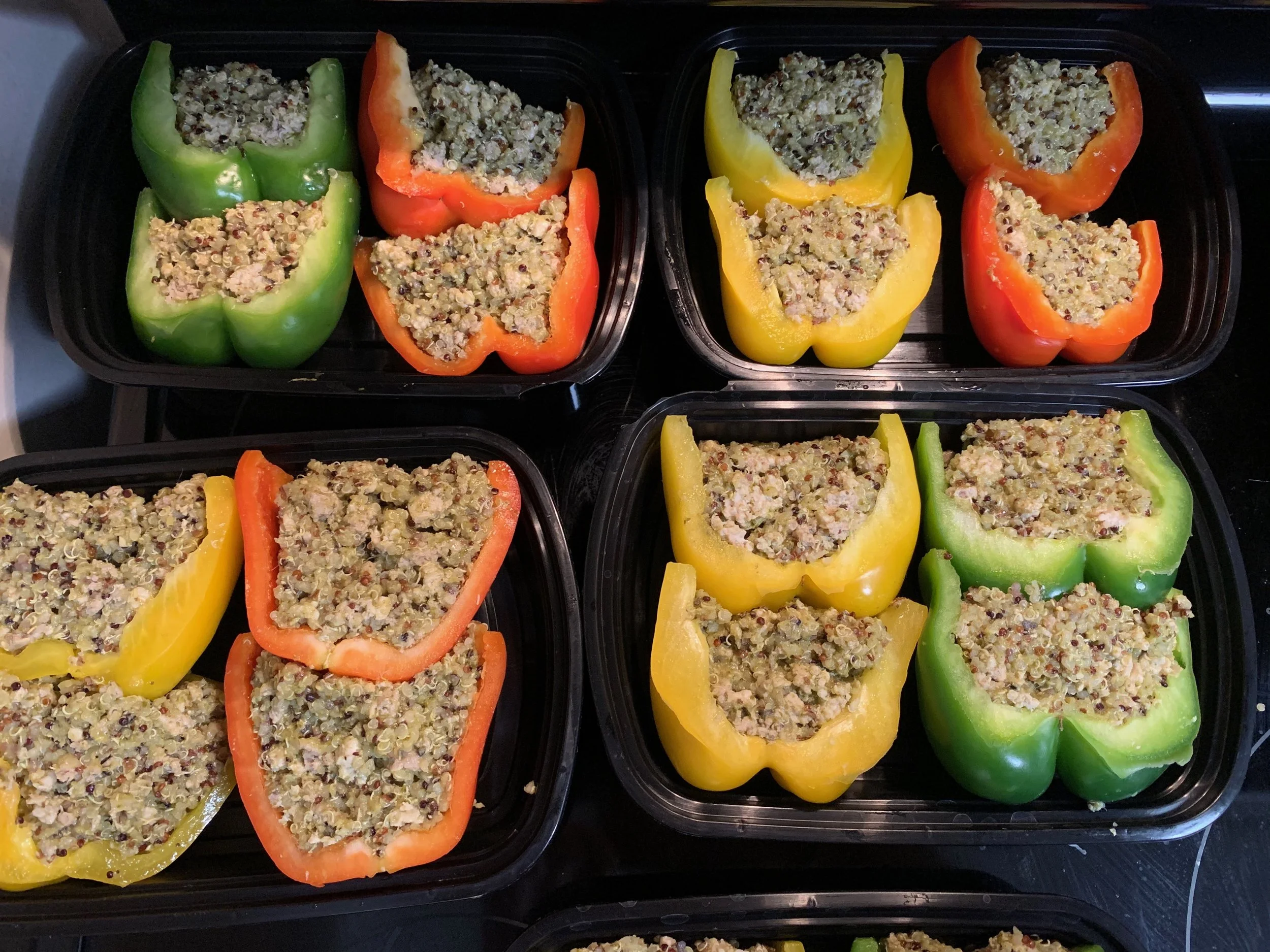
You do not need a 21-meal Sunday prep. You need two meals — a breakfast and a lunch, say — that you can make on autopilot, that hit your protein target, and that you'd actually eat five days in a row. That's it.
Decision fatigue is what wrecks eating patterns in a busy week. Removing the decision on two meals frees up all your willpower for the moments that actually need it. Repeatable beats perfect.
Step 5 — Delete one obstacle before the week starts
Action: Remove a single point of friction before Monday.
Habits don't usually fail because you lack motivation. They fail because there's friction in the way — the gym bag that isn't packed, the workout clothes you can't find, the fridge with nothing in it.
So each Sunday, delete one obstacle. Pack the bag and put it by the door. Lay out the clothes. Place the grocery order. Refill the water carafe for tomorrow. One removed obstacle does more for your consistency than a burst of motivation, because it's still there on the day motivation isn't.
What NOT to do
Every September, the internet will try to sell you a detox and a 30-day challenge. Skip both.
Detoxes don't do what they claim — your liver and kidneys already handle that, and no tea or juice cleanse improves on them. 30-day challenges fail for the opposite reason they feel good: they're built on intensity, not structure, so they collapse the moment life gets normal again. You're trying to rebuild a routine that survives a hard week, not white-knuckle through 30 days and quit.
If your instinct right now is to fix everything at once with a big dramatic overhaul, I wrote a whole piece on why that backfires: why optimizing your health is making you feel worse. Structure beats spectacle. Every time.
Where to start
Here's the branch logic, and it's the most important part:
Do Step 1. Then pick exactly ONE more. Not all five. One.
Water is the anchor because it's the lowest-effort win — it rebuilds your sense that you're back on track without costing you any willpower. Once that's automatic (usually a week or two), add one more step. Stack them slowly. The whole design of this reset is that it never asks you to start over.
Frequently asked questions
Why am I so tired after summer if I was more active?
Because activity isn't the same as recovery. A summer of hikes, travel, late nights, and inconsistent meals is high output with low recovery — a pattern sports science calls overreaching. You built up fatigue faster than you cleared it, so you end up flat rather than fitter.
How long does it take to get back on track?
Usually one to two weeks per habit if you add them one at a time. Restarting hydration can feel better within days. Trying to fix everything at once is what makes it take longer — or fail entirely.
Do I really need a water filter for this?
No — Step 1 is about making hydration convenient, and any bottle or carafe you'll actually reach for works. I use a Bluevua ROPOT-Lite because it removes the "is my tap water good?" question and sits on the counter with no install. It's a convenience upgrade, not a requirement.
Is a fall detox or cleanse a good way to reset?
No. Your liver and kidneys already detox your body, and cleanses don't improve on that. They also rely on short bursts of intensity, which is the opposite of the durable structure this reset is built on.
What if I can only do one thing?
Do Step 1 — restart hydration and make it automatic. It's the lowest-effort, highest-return move, and it rebuilds momentum you can then spend on a second habit.
If this sounds uncomfortably familiar…
Maybe you've done this loop before — a strong spring, a chaotic summer, a September where you overhaul everything and burn out by October. If you keep restarting from zero every few months, the problem usually isn't your effort. It's that no one built you a structure that survives a hard week.
That's exactly the problem my coaching practice exists to solve — turning scattered good intentions into a system that actually holds. If that's you, [book a free discovery call](https://geni.us/bvc-book-a-call) and let's build the version that sticks.
The Bottom Line
Summer quietly dismantles the structure your health runs on, and more activity with less recovery leaves you flat by September. Don't fix it with a detox or a 30-day sprint. Rebuild the scaffolding one piece at a time: restart hydration first, then add just one more habit. Start with Step 1 today — put water where you'll actually drink it — and pick your second step next week. Not all five. One.
Related Articles
This post is sponsored by Bluevua and contains affiliate links. If you purchase through my links, I may earn a small commission at no extra cost to you. Sponsorship does not change my recommendation — I only work with and recommend products I actually use and that meet my evidence-based quality standards.
This article is for educational purposes and is not a substitute for professional medical advice. I am a health coach, not a physician. Consult your healthcare provider before making changes to your diet, exercise, or supplement routine — especially with existing conditions or medications.