Best Water Filter for Renters: Pitcher vs. Berkey vs. Reverse Osmosis (Honest Review)
This blog is based on a video from my YouTube channel. If you prefer to watch that, click here.
Let me guess — you've been drinking your tap water with a vague sense of guilt for years.
Maybe you have a Brita pitcher that you definitely haven't changed the filter in... a while. Or you've gone down the internet rabbit hole of alkaline water vs. hydrogenated water vs. adding a packet of electrolytes to everything, and now you're more confused than when you started.
I get it. I was right there with you.
Over the past few years, I've tested three different water filtration systems — a pitcher filter, a Berkey gravity system, and a countertop reverse osmosis unit — and I have a lot of opinions about all of them. I'm going to walk you through what each one actually does, what it misses, what it costs over time, and why I landed where I landed.
Spoiler: reverse osmosis wins. But the "how" and "why" matters if you're going to make an informed decision.
Quick Comparison: At a Glance
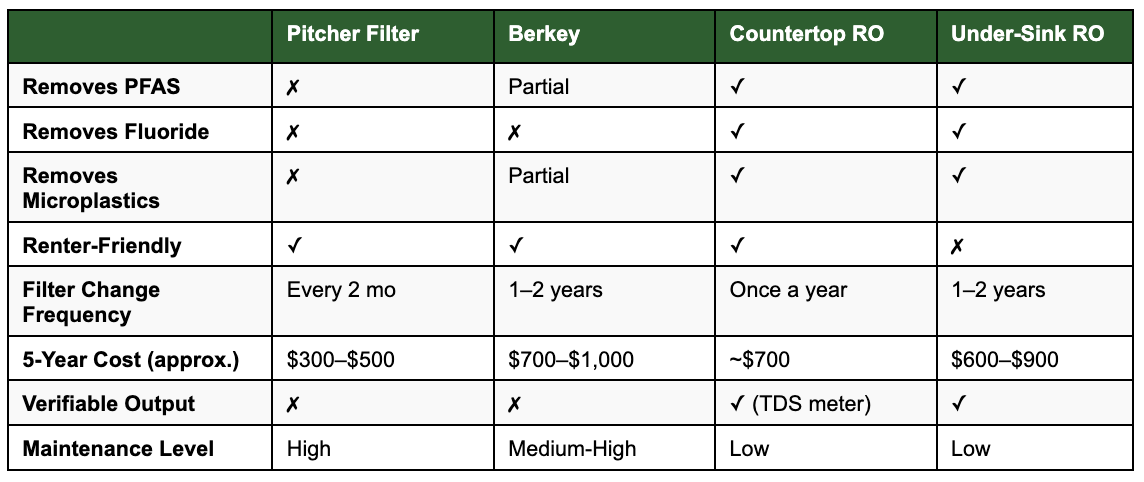
Why Filtering Your Tap Water Actually Matters
Before I get into my personal saga with water filters, a quick note on why this even matters — because "tap water is safe" is a bit of a simplification.
Tap water in the US goes through treatment, yes. But that treatment process creates byproducts (like trihalomethanes and haloacetic acids) that end up in your glass. Add aging pipes that can leach lead, PFAS from industrial runoff that treatment plants weren't designed to handle, and microplastics that are showing up literally everywhere — and "safe in certain doses" starts to feel like a low bar.
I'm not trying to scare you. I'm just saying your Brita pitcher may not be doing what you think it's doing.
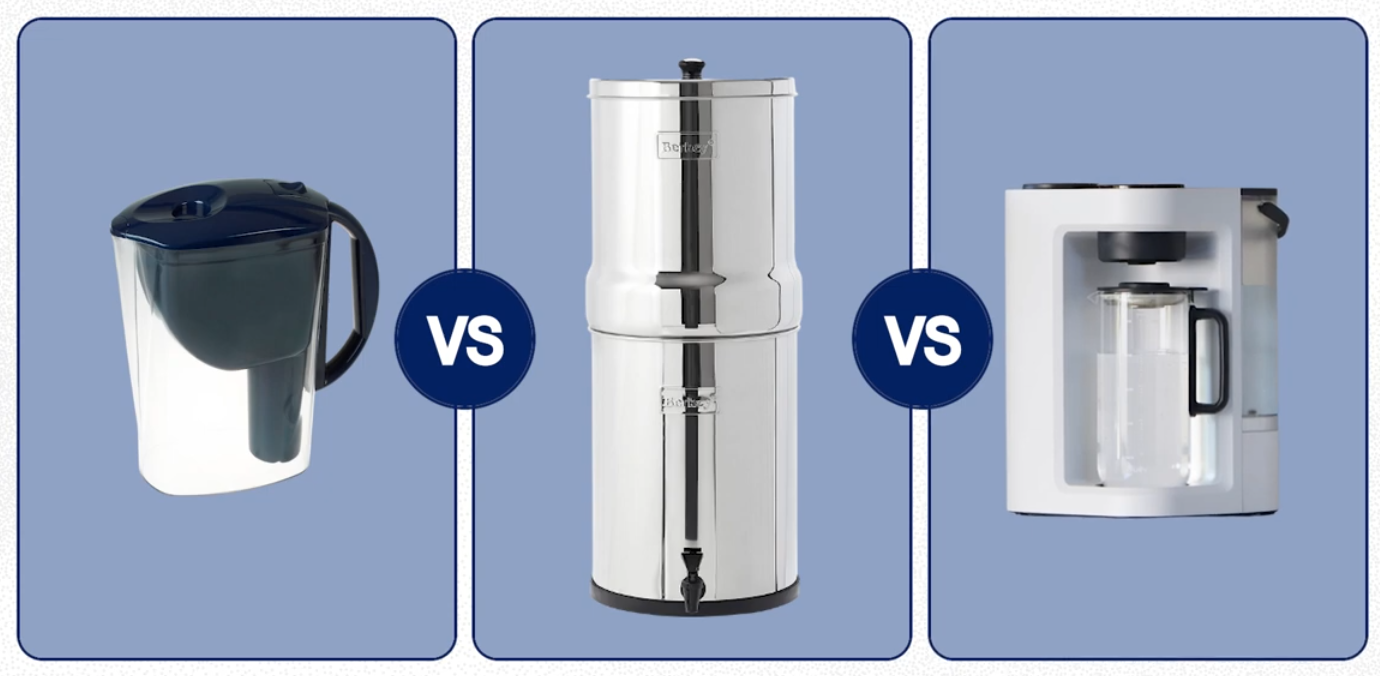
Stage 1: The Pitcher Filter (Brita, PUR, etc.)
Let's start with the most common entry point — the pitcher filter. I used one for about six months, and here's the honest breakdown.
What it actually does:
Removes chlorine (which improves taste — this is mostly why people think it's working great)
Filters some sediment
Basic activated carbon filtration down to about 1 micron
What it misses:
PFAS ("forever chemicals")
Fluoride
Heavy metals (lead, mercury)
Bacteria and viruses
Microplastics
Basically anything dissolved at a molecular level passes right through.
There's also the maintenance issue — and I say this as someone who is extremely low maintenance by nature. You're supposed to change the filter every two months. Which means you're either remembering to reorder filters regularly, or (more likely) you're running water through a filter that stopped working months ago. Worse, that damp filter cartridge sitting in water is genuinely a breeding ground for mold and bacteria if neglected.
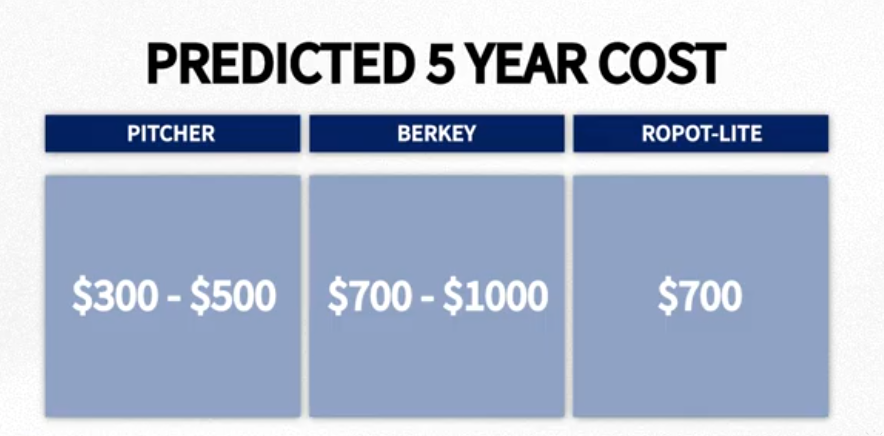
And on cost? Pitchers look cheap upfront — $30 to $50 — but replacement filters every two months at $6–$15 each adds up to $300–$500 over five years. For mediocre filtration.
Stage 2: The Berkey Gravity Filter
After six months with the pitcher, I upgraded to a Berkey. You know the one — the big stainless steel cylinder that looks like it belongs in a survivalist bunker. I used mine for about a year and a half.
The Berkey uses carbon block filters, which are a meaningful step up from the activated carbon in pitcher filters. Instead of just trapping particles, carbon block filtration works through a process called adsorption — contaminants actually bond to the surface of the filter material. It catches more heavy metals, pesticides, and herbicides, and it filters down to about 0.2 microns.
What the Berkey does better:
Removes more heavy metals and pesticides than a pitcher filter
No electricity needed
Filters last 1–2 years (less frequent replacement)
Where it falls short:
Cannot reduce total dissolved solids (TDS)
Cannot filter fluoride — it's dissolved at a molecular level and doesn't bond to carbon block the way other contaminants do
Very slow filtration — we were constantly refilling ours because we drink a lot of water
Setup is cumbersome ("priming" the filters is a whole thing)
No way to verify it's actually working beyond a rudimentary food coloring test
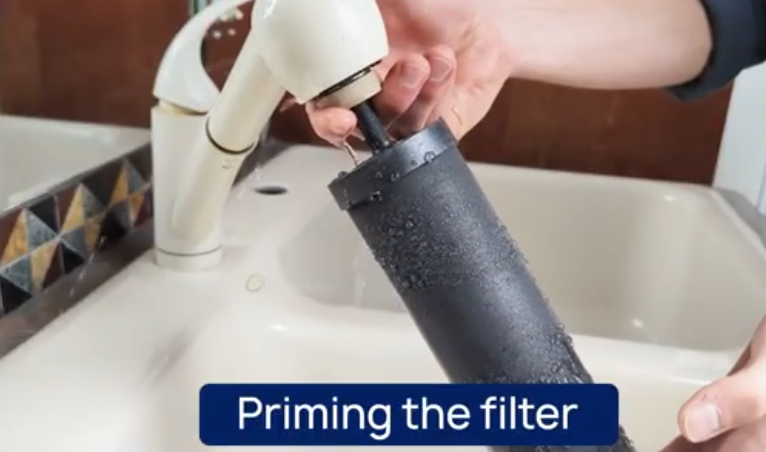
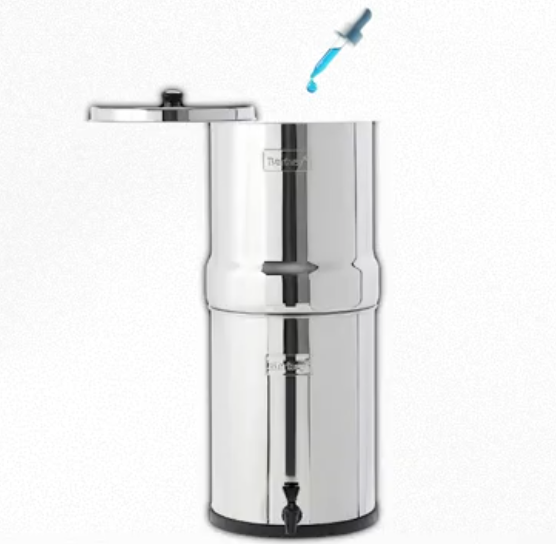
That last point bugged me more than I expected. I have no way to know if this filter is actually doing its job. A food coloring test is... not the same as measured data on contaminant removal.
And at $300–$400 upfront plus $150 replacement filters every 1–2 years? The Berkey actually ends up being one of the more expensive options over five years (roughly $700–$1,000). For filtration that still has meaningful gaps.
Stage 3: Reverse Osmosis — The Gold Standard
After my mixed experience with the Berkey, I started researching more seriously. And pretty much everything I read pointed to reverse osmosis as the most comprehensive filtration technology available for home use.
Here's what makes it different: reverse osmosis filters down to 0.0001 microns. That's not a typo. A semi-permeable membrane allows only water molecules through — everything else, dissolved or not, gets blocked. We're talking fluoride, microplastics, pharmaceutical residues, heavy metals, bacteria, PFAS. All of it.
The traditional problem with reverse osmosis has always been installation — typically you're looking at an under-sink setup that requires plumbing access. As a renter, that's a hard no.
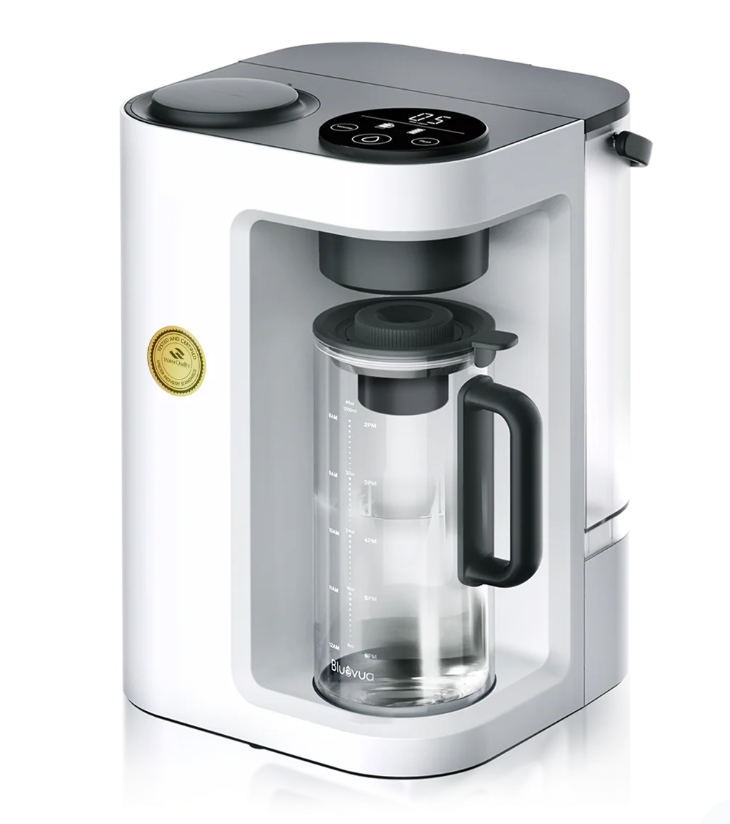
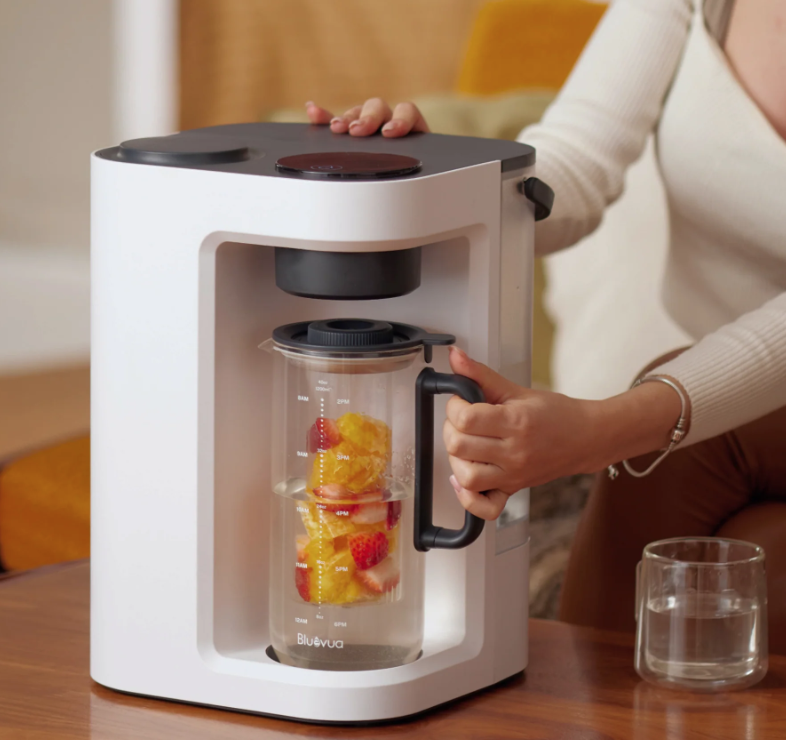
That's when I found countertop reverse osmosis units exist. Specifically, the Bluevua RO POT Lite — which I've now been using for 18 months and counting.
18 Months with the Bluevua RO POT Lite: Honest Review
A heads up: this is an affiliate link. I only share products I personally use and recommend — and I've had this one on my counter for over a year and a half, so I have actual opinions. Use code VICTORIA15 for 15% off through below.
Setup
About 10 minutes, no tools. Take it out of the box, fill the reservoir, run two flush cycles, done. I've moved apartments and set it back up in the time it takes to make coffee.
The TDS Meter: My Favorite Feature
Total Dissolved Solids (TDS) is a measure of what's in your water beyond H2O — the lower the number, the purer the output. My Chicago tap water typically registers 130–180 ppm. The RO POT Lite consistently gets it down to 1–2 ppm.
I can actually see the filtration happening. After years of trusting that filters were working, that transparency matters to me.
Filtration (5-Stage Process)
Pre-filter: Catches large particles, rust, sediment
Carbon block: Chlorine, VOCs
Protective membrane layer: Guards the RO membrane
RO membrane (0.0001 microns): Heavy metals, fluoride, bacteria, microplastics, PFAS
Post carbon filter: Final taste improvement
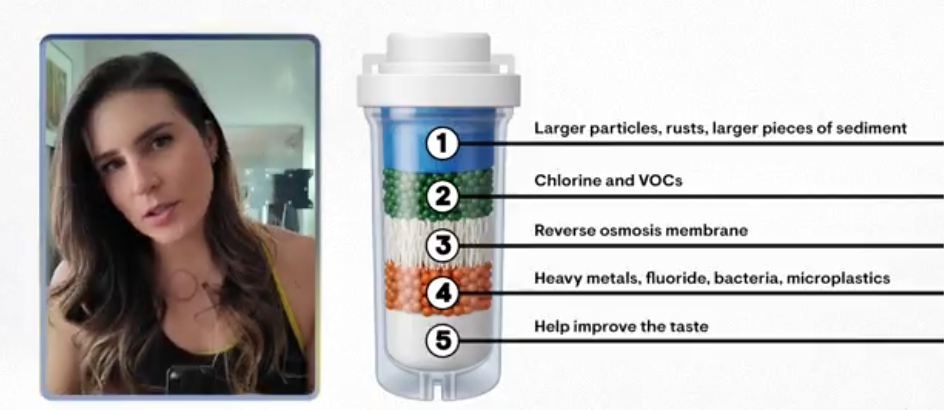
All five stages are packed into one filter cartridge you swap out once a year. Unscrew the top, pull the old one, drop in the new one, twist closed. Under two minutes.
Daily Use
I fill the reservoir twice a day — maybe five minutes total. There's a half-fill and full-fill option, a filter life indicator, and a touchscreen with about four buttons. I've had smart appliances with less intuitive interfaces than this thing.
The design is actually nice (unlike the Berkey's silver trash can aesthetic). There's a clear carafe with an inner carafe you can use for fruit-infused water if that's your thing.
5-Year Cost: ~$700
$300 upfront + $80 replacement filters annually. That's roughly comparable to the Berkey over five years — but with significantly better filtration, verifiable output, and a fraction of the maintenance hassle.
Is a Countertop RO Unit Right for You?
This is a great fit if you:
Rent and can't install an under-sink system
Want to actually verify your water is getting cleaned (not just trust that a filter is working)
Are done changing filters every two months
Want comprehensive filtration — fluoride, PFAS, microplastics included — without a renovation project
It's probably not the right call if you have very limited counter space (this does take up a footprint), or if you already own an under-sink RO system that's working well.
FAQ: Water Filtration Questions I Actually Get
Does reverse osmosis remove minerals your body needs?
Yes — RO removes essentially everything, including beneficial minerals like calcium and magnesium. That said, the contribution of tap water to your overall mineral intake is pretty small compared to diet. If you're eating a reasonably varied diet, you're not going to become mineral-deficient from filtered water. If this is a genuine concern for you, remineralization drops exist.
What is TDS and why does it matter?
TDS stands for Total Dissolved Solids — it measures how much stuff (minerals, chemicals, particles) is dissolved in your water, expressed in parts per million (ppm). Lower TDS = purer water. Tap water in most US cities runs 100–200 ppm. The RO POT Lite consistently gets mine to 1–2 ppm.
Is alkaline water actually better for you?
Short answer: probably not in any meaningful way. Your body tightly regulates blood pH regardless of what you drink — the research on alkaline water benefits is pretty thin. Hydration quality (i.e., what's been filtered out) is a more well-supported concern than pH. Save the alkaline water markup and put it toward a filter that actually does something.
What about pitcher filters with more advanced filtration claims?
Some newer pitcher filters (like ZeroWater) do remove more contaminants than traditional Brita-style filters. But they still don't match RO on completeness, and they require very frequent filter changes. They're a reasonable middle ground if cost is the main constraint — just know what you're getting.
The Bottom Line
After trying three different systems over several years, here's where I've landed:
Pitcher filters: Better taste, minimal real filtration. Fine as a starting point.
Berkey: A step up, but overpriced for what it delivers and surprisingly high maintenance. Notable gaps on fluoride and TDS.
Countertop RO (Bluevua RO POT Lite): Comprehensive filtration, verifiable output, annual filter change, renter-friendly. This is where I've stayed for 18+ months.
If you want the highest quality filtered water without a plumber, without monthly filter subscriptions, and without just hoping it's working — this is the best option I've found at this price point.
Questions about water filtration or anything else I mentioned? Drop them in the comments — happy to dig into specifics.
Disclaimer: This post is for informational purposes and reflects my personal experience with these products. Individual results may vary. This post contains affiliate links — I earn a small commission on purchases at no additional cost to you.