XPOLAR X2 Review: I Used It on My Knee for 3 Weeks (Does Contrast Therapy Actually Work?)
This blog is based on a video from my YouTube channel. Prefer to watch? Click here.
Sponsorship disclosure: XPOLAR sent me the X2 and paid for the video this post is based on. They were allowed to fact-check it, but the opinions are mine — that's written into my contract. You'll get the good and the not-so-good below.*
For about two years, you couldn't open your phone without somebody telling you to climb into a barrel of ice water.
Now the trend has moved one seat over. Cold plunge interest is down roughly 55% from its peak, and contrast therapy — hot, then cold, then hot again — is up 164% this year. And the newest version of it doesn't need a tub at all.
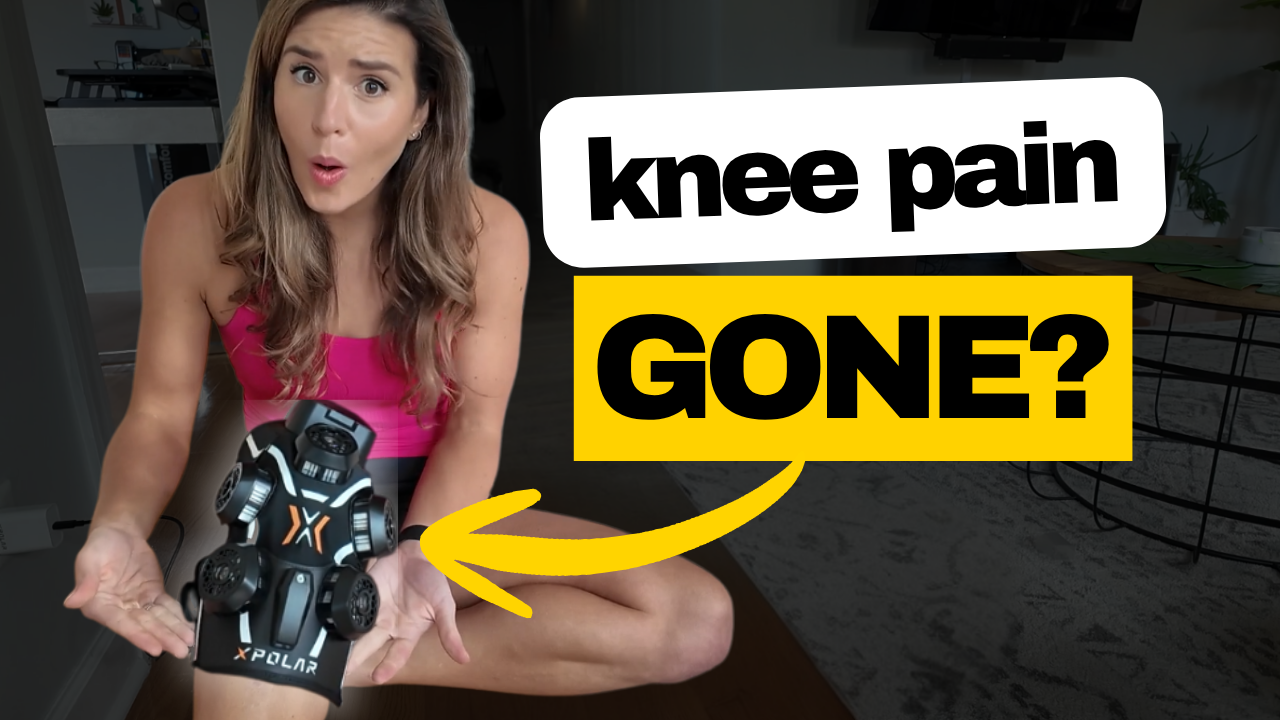
It's called the XPOLAR X2. Hot and cold, strapped onto one joint. I've used it on my post-ACL knee for three weeks and dug through the research, so here's the honest breakdown: is it better than a bag of ice, or is it the same trend in a smaller package?
Does Contrast Therapy Actually Work?
Contrast therapy gets sold as the answer to almost everything: faster recovery, less soreness, less inflammation, better circulation, a long dopamine boost, more brown fat, fewer sick days, a longer life.
Some of that has real evidence. Some of it is one small study repeated until it sounded like fact. And almost all of it comes from whole-body exposure — plunge tubs, saunas, cold showers.
Quick sort:
Soreness and recovery is the best-supported claim. When researchers pooled whole-body contrast studies, contrast modestly reduced next-day soreness compared with resting.
The dopamine number everyone quotes comes from one small study of about ten men sitting in cold water up to their necks for an hour.
The longer-life research is mostly on saunas — heat alone, not contrast. It's a strong signal for heart health, but it's observational, so it can't prove the sauna did it.
Here's why that matters. Those claims fall into two buckets.
Bucket one is whole-body: mood, metabolism, immunity, heart health. Those depend on heating or cooling enough of your body that your whole system reacts. A wrap on one knee won't do that. If that's what you're after, a device like this isn't it.
Bucket two is local: pain, stiffness, swelling, soreness, range of motion. Those happen where the hot and cold actually touch your body. That's where shrinking this down to one joint might make sense.
And honestly, that's what you're asking me about. Not your cardiovascular risk profile — one spot. The knee that's fine until you stack too much volume in one week. The shoulder that's been cranky since 2019.
What the research says about contrast therapy on one joint
One review pulled together seven controlled trials — 303 people, all dealing with musculoskeletal pain. The results pointed the same way: less pain, better range of motion, better function.
Then the research gets more specific, and most of it is on knees. In one trial of 180 people with knee osteoarthritis, contrast therapy came out ahead of cold alone on pain, function and quality of life.
Why would alternating matter? The popular explanation is that switching between hot and cold creates a pump that flushes swelling out of the joint. That part is more theory than proof. The more boring explanation is probably closer to the truth: heat helps stiffness, cold helps pain and swelling, and contrast gets you both in one session.
Now the limits, because I'd rather you trust me in six months than click today:
These are small studies of modest quality.
They were done in people with arthritis, which isn't the same as a post-ACL knee or a "too much volume this week" knee.
Nobody has run the big, definitive trial yet.
Translation: the evidence leans yes for pain, stiffness and function. It's just not as strong as I'd like.
Is a Device Better Than Doing Contrast Therapy Yourself?
You can do contrast therapy for basically free. Two buckets, one hot, one cold. Or an ice pack and a heating pad. That's what most of those studies actually used.
So is a device better, or just more expensive?
One study tested exactly that: 60 people with knee arthritis. Half did the bucket version. The other half used a contrast device wrapped around the knee — not the X2, but the same idea. The device group did better on pain, range of motion, function, and how far they could walk in two minutes.
The study can't tell us why. Having done the bucket version myself, my guess is that none of it is magic:
Consistency. Buckets drift. The ice melts, the hot water cools, and by round three you're not really doing contrast anymore. A device holds the temperature.
Compression. A bucket can't squeeze your knee. Cold plus compression is one of the better-supported combinations in this whole space.
So here's the honest bar: the hot and the cold aren't special. If you'll really do the bucket version three times a week, you're getting a lot of the benefit for free. What a device sells you is consistency, compression and convenience.
XPOLAR X2 Review: What It's Actually Like to Use
The X2 packs cold, heat, contrast and compression into one wrap. First impression: it's built. It feels solid, and the straps are great — secure, no creeping or sliding. That sounds small until you've used a recovery device that slowly falls off your leg for fifteen minutes.
Cold mode
It goes down to 0°C (32°F) — actual ice temperature. I expected mild. This is not mild.
That matters more than it sounds, because cold drops off fast as it travels through tissue. That's exactly why a joint is a better target than a big muscle: your knee sits right under the skin, while your quad is buried.
Heat mode
Up to 50°C (122°F). Same story: surprisingly hot, not warm-blanket hot.
Heat is the underrated one. When researchers ranked recovery methods across 59 studies, a plain hot pack came out first for next-day muscle soreness. It's also good for loosening stiffness. Not fancy, just effective — and it's the mode I think most of you would use most.
Contrast mode
This is what the whole post is about. It cycles between hot and cold automatically — no buckets, no timer, no water going lukewarm by round three.
Compression
Three levels, and this surprised me most. It isn't a static squeeze — it pulses: hold, release, hold, release. Intermittent compression is the type researchers actually study for recovery. It's not the full-leg systems used in those studies, but it's the same principle. Level three really compresses, so if compression sleeves feel intense to you, start at one.
Where the evidence sits: compression alone is better at changing how sore you feel than at changing measurable recovery. Paired with cold, in studies after knee surgery, the combination has tended to beat cold alone — mostly on pain. Results for swelling and range of motion are more mixed. It's still the best-supported thing this device does, but I wouldn't promise you more than pain relief.
My real-world experience
I had ACL surgery six years ago. That knee is fine 90% of the time, but if I stack too much volume in one week, the fat pad gets angry and I hear about it for days. That's exactly what I hoped this would help.
My husband and I have both used it after we play, and we each said the same thing without comparing notes: the knee feels less painful and less swollen the next day.
That's our experience, not a study. But it's consistent, neither of us went looking for it, and it's why the X2 is still in rotation now that filming's done.
Two things I didn't expect to care about
It stays on while you move. The alternative is a machine with a hose running to a cooler of ice water, and you sitting beside that cooler for twenty minutes. This straps on and you go do something else.
It's not knee-only. XPOLAR lists the wrap as fitting the shoulder, thigh and calf too.
What I don't love (the cons)
The fans. Cold mode runs on five of them. XPOLAR calls them quiet; I'd call them present. Not loud, not silent — if you plan to watch something with it on, you'll notice. This is the one that mildly annoys me.
The cold battery is short. Cold mode gets about 45 minutes, and sessions run about 15 — so roughly three cold sessions per charge. Heat lasts around two hours. You can use it while charging, but only with the adapter in the box; a regular USB-C charger won't allow it. Keep that adapter.
The price. $349 is real money. The X2 is FSA and HSA eligible, so you may be able to use those funds at checkout — plans vary, so check yours first.
Is the XPOLAR X2 Worth $349?
Back to the original question: is this better than a bag of ice? For some of you, yes. For a lot of you, honestly, no.
Buy it if:
You're coming back from knee surgery or a knee injury — with your PT's okay.
You have a joint that flares predictably when you push volume.
You're in season and need to be functional again in 48 hours.
You know you will never fill a bathtub with ice or set up two buckets. The best recovery tool is the one you don't have to talk yourself into.
Skip it if:
You want basic pain relief and a $15 gel pack already does it.
You'd be icing your quads after every leg day. Regular cold after lifting can work against muscle growth — that's a different conversation.
You're expecting it to fix something structural. It manages symptoms; it doesn't repair tissue.
You can get it here: XPOLAR X2. That's my affiliate link, so I earn a commission if you buy through it.
How to use it (research-based, not medical advice)
If you're post-op, your surgeon and PT outrank me every time.
Stiff joint, before you move: heat, 10–15 minutes.
Angry and swollen, right after activity: cold plus compression — the best-supported thing this device does.
Chronic and achy, nothing acutely wrong: contrast. That's where the knee studies live.
Rehabbing, with exercises to do: cold first, then the exercises. After surgery or injury your quad can partially shut itself off to protect the knee, and cold seems to help switch it back on. In one ACL study, people who iced and then trained gained more strength than people who did either alone.
Numbness warning: if you have numbness around the knee — common after surgery — go easy on both cold and heat. You can't judge what you can't feel.
FAQ: Contrast Therapy and the XPOLAR X2
What is contrast therapy?
Contrast therapy alternates heat and cold on the body — typically hot, then cold, then hot again. Heat helps with stiffness and cold helps with pain and swelling, so alternating aims to give you both in one session.
Does contrast therapy work for knee pain?
The evidence leans yes for pain, stiffness and function. One review of seven controlled trials (303 people) found less pain and better range of motion, and a 180-person knee osteoarthritis trial favored contrast over cold alone. The studies are small and modest in quality, so treat it as supportive.
Is a contrast therapy device better than two buckets of water?
One 60-person knee arthritis study found a contrast device beat the bucket method on pain, range of motion, function and walking distance. The likely reasons are consistency and compression, not better hot and cold. If you'll actually do the buckets three times a week, you get much of the benefit free.
Is the XPOLAR X2 worth $349?
It depends on who you are. It's worth considering if you're rehabbing a knee (with your PT's okay), have a joint that flares with volume, or know you won't set up buckets. Skip it if a $15 gel pack already handles your pain.
How long does the XPOLAR X2 battery last?
Cold mode runs about 45 minutes — roughly three 15-minute sessions per charge. Heat lasts around two hours. To use it while charging, you need the adapter included in the box.
Can I use the XPOLAR X2 with an FSA or HSA?
The X2 is listed as FSA and HSA eligible. Plans vary, so check with yours before buying.
Is contrast therapy a replacement for a cold plunge?
They do different jobs. Whole-body claims like mood, metabolism and heart health depend on exposing your whole body. A wrap on one joint targets local pain, stiffness, swelling and soreness.
Can I use contrast therapy after ACL surgery?
Research and my own experience say it can help, but talk to your surgeon and PT first. Numbness around the knee is common after surgery, so go easy on both hot and cold if you can't fully feel the area.
When One Joint Isn't the Whole Problem
If you've been chasing recovery tools for a joint that keeps flaring — and you're not sure whether the issue is the knee, your training volume, or how the two interact — a device won't sort that out for you.
Building a recovery and training plan around an old injury is what I coach people through. If that sounds uncomfortably familiar, book a free discovery call here and let's figure it out.
The Bottom Line
Contrast therapy has real but modest evidence for local pain, stiffness and function — and almost none of the flashy whole-body claims apply to a wrap on one knee. The XPOLAR X2 isn't better hot and cold than a couple of buckets. What you're paying for is consistency, compression and convenience, and for me that's been worth it on a post-ACL knee.
The one action to take: point the tool at the joint that actually bothers you. If a $15 gel pack does the job, keep it. If you'll never set up the buckets, a device you'll use beats a method you won't.
Related Articles
This post is sponsored by XPOLAR, who provided the X2 for testing and paid for the video it's based on. XPOLAR fact-checked the content, but the opinions are my own. It also contains an affiliate link — if you purchase through it, I may earn a small commission at no extra cost to you. Sponsorship does not change my assessment; I only work with products I actually use and that meet my evidence-based quality standards, and the cons stay in.
This article is for educational purposes and is not a substitute for professional medical advice. I am a health coach, not a physician. Consult your healthcare provider before making changes to your recovery routine — especially after surgery, with numbness, circulation issues, or existing conditions.