Red Light Therapy for Joint Pain: My Honest Kineon MOVE+ Review
This blog is based on a video from my YouTube channel. Prefer to watch? Click here.
Heads up — this is a sponsored review. Kineon partnered with me on this post and sent me the MOVE+ to test, and I earn a small commission if you buy through my link. None of that changed the review. Everything below — including the parts where I tell you what it can't do — is my honest take after three months of daily use.
I've had my ACL reconstructed, my kneecap broken, several herniated discs, and two torn calves. It's safe to say I've beaten my body up pretty badly. So finding the recovery tools that actually earn their spot — and telling you which ones don't — has kind of become my thing.
Which brings me to red light therapy for joint pain. I've been using the Kineon MOVE+ twice a day for the past three months, on my knee, my neck, and my low back. And the question I want to answer isn't the boring one ("does red light therapy work?"). It's the honest one: is a ~$500 targeted device actually worth it for a real person, with a real budget and a real nagging injury?
I've got all three. Let's get into it.
Who this is actually for
If you're currently dealing with an injury — joint pain, a cranky tendon or ligament, neck tension — or you've dealt with that stuff before and still get the occasional flare, this is written for you. Active people who want to keep doing what they love, with a few spots that light up when they push too hard.
I'm judging the MOVE+ on three things: does the science hold up, does it fit into a real life so you'll actually stay consistent, and is it worth the money. In that order.
How red light therapy actually works
Start with the mechanism, because it's real. Specific wavelengths of red and near-infrared light get absorbed by your cells — specifically the mitochondria, your cells' energy factories. That absorption may support cellular energy production (ATP), support healthy local blood circulation, and help regulate the body's inflammatory response.
That last part is the big one for most of us. Red and near-infrared light appear to help dial down the messengers that drive swelling and soreness. So when people talk about red light and "recovery," inflammation is really the throughline.
Now — what does that translate to in an actual human body? Here's the honest, current picture, tissue by tissue.
Tendons — the strongest case
This is where it's most promising. For tendon pain — tennis elbow, patellar tendon, that nagging stuff — the research shows red and near-infrared light can help reduce pain and improve function. A 2021 systematic review by Tripodi and colleagues in BMC Sports Science, Medicine and Rehabilitation is a good example of the signal here.
Two honest caveats: the quality of that evidence is still developing, and it works best as an add-on to loading and strengthening work — not instead of it. Like most recovery interventions, consistency seems to matter a lot. So it's a legit helper for irritable tendons, layered on top of the actual rehab.
Muscle and soreness — genuinely mixed
This is the most-studied area, and also the most mixed. Some studies show using it around your workouts reduces soreness and speeds up recovery. Other well-run trials show basically no difference versus a placebo.
So I'm not going to tell you it'll definitely make you less sore. The honest answer is it might — and it seems to depend a lot on dose, timing, and the individual. For me, it's earned a place in my routine, and I'll show you exactly how below.
Inflammation — the most defensible benefit
Across a lot of research, these wavelengths appear to support a healthy inflammatory response, which may contribute to less discomfort and better recovery. That's the most defensible way to think about what this device does. It's not a magic healing ray. It's a tool that can help calm an overstressed area down.
Ligaments — where I have to be straight with you
My whole knee story is a ligament story — I tore my ACL. And the honest truth is the human evidence for red light actually healing ligament tissue is thin; most of it is early-stage or animal research.
There's also a physics problem. My ACL sits deep inside the joint, and light from a device on the surface of your skin only reaches so far. It's good at superficial-to-moderate depth — muscle, tendon, the soft tissue around a joint. While the MOVE+ reaches deeper than many consumer devices, the amount of light hitting a ligament deep inside the knee is still much lower than what reaches tissue near the surface.
So I won't claim it repaired my ACL. Where I believe it's helped is supporting the tissues around the joint and helping me manage inflammation while I recover.
What red light therapy probably can't do
Here's the part almost no review includes — because a tool is only useful if you know its limits.
It won't heal a complete tear or replace surgery. If you fully rupture a ligament or tendon, light doesn't reconnect it. That's a repair conversation, not a recovery-device one.
It won't reverse structural damage. Advanced joint degeneration isn't getting rebuilt by light. It may take the edge off pain and inflammation short-term, but it's not turning back the clock on the structure.
It won't reach the deepest structures. Even with deeper penetration than LED-only devices, light has physical limits. The center of a large joint or a fully torn ligament simply won't receive the same dose as tissue near the surface.
It won't fix a mechanical problem. This is the big one I see as a coach. If a joint hurts because of how you're loading it, or a strength imbalance, red light is a band-aid. The fix is addressing the loading. Use the light to feel better so you can do the real work — not to skip it.
The accurate mental model: this is an adjunct. A helper that can calm inflammation and support recovery, on top of the things that actually move the needle — loading the tissue, sleep, managing stress.
Panels vs. wraps vs. targeted devices: which one you actually need
People ask me constantly whether they should get a panel, a wrap, or something like the MOVE+. They're three different tools, and honestly, most people buy the wrong one for what they're trying to do.
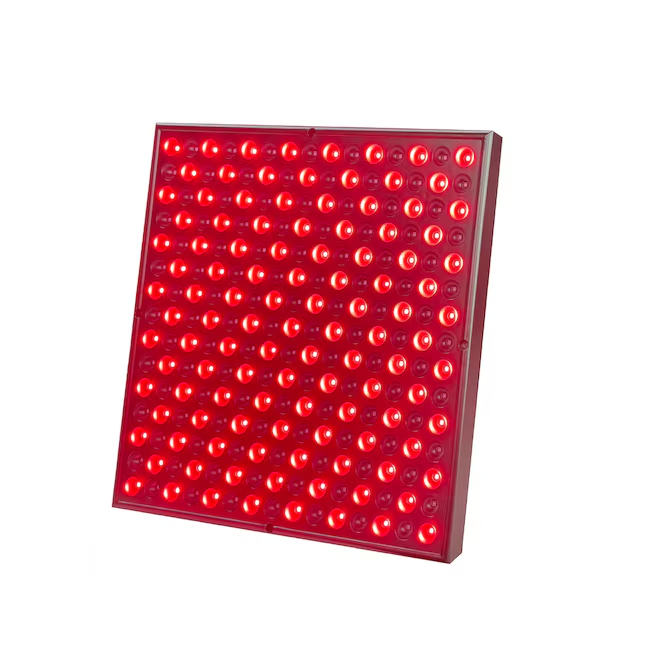
Panel (big flat lights): Whole-body and large surface areas; easy daily habit, non-contact — light travels through air, reflects off skin, and spreads out, so less reaches a deep target
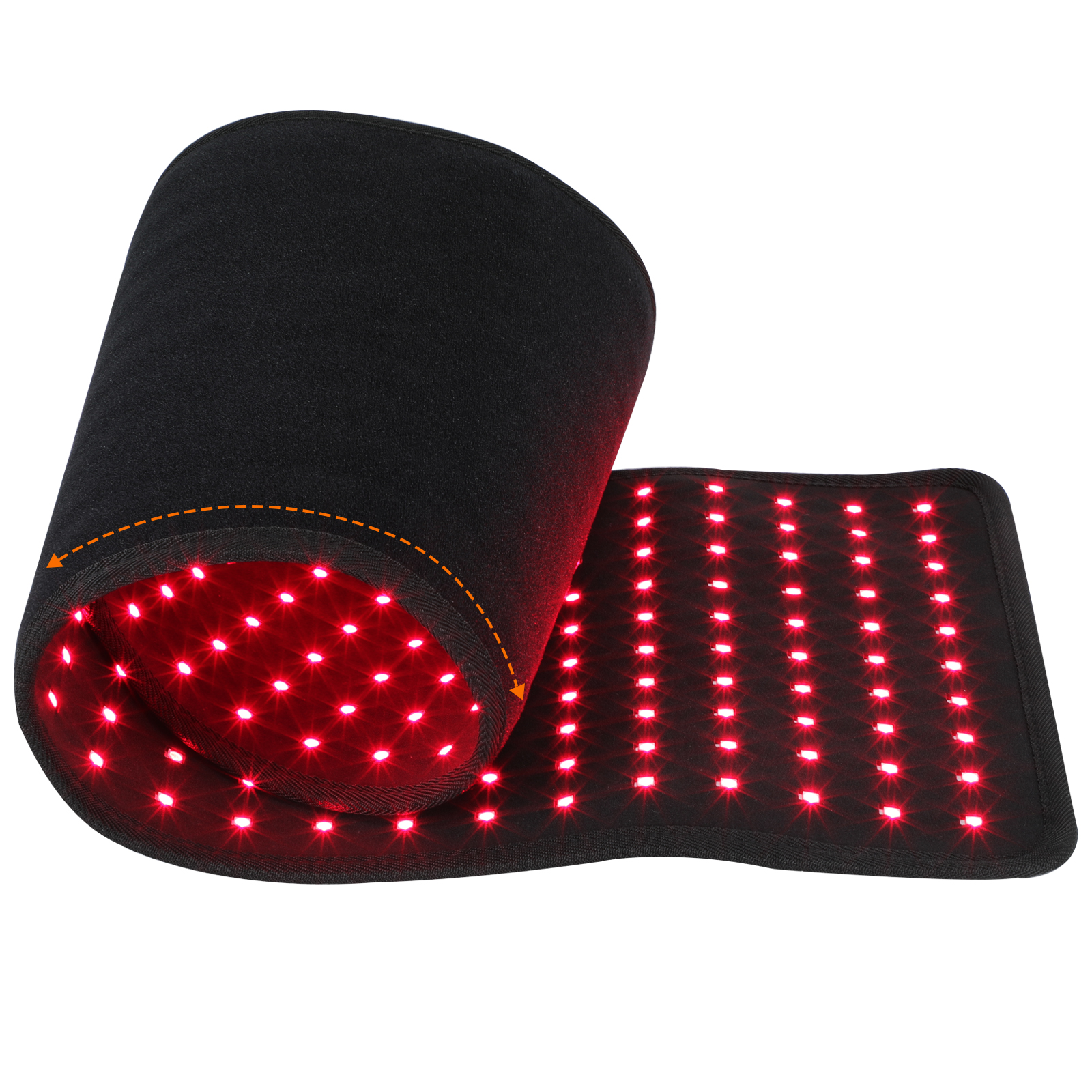
Wrap (flexible strap-on pads): Covering a whole limb or your back on a budget, most are LED-only and more diffuse/surface-level
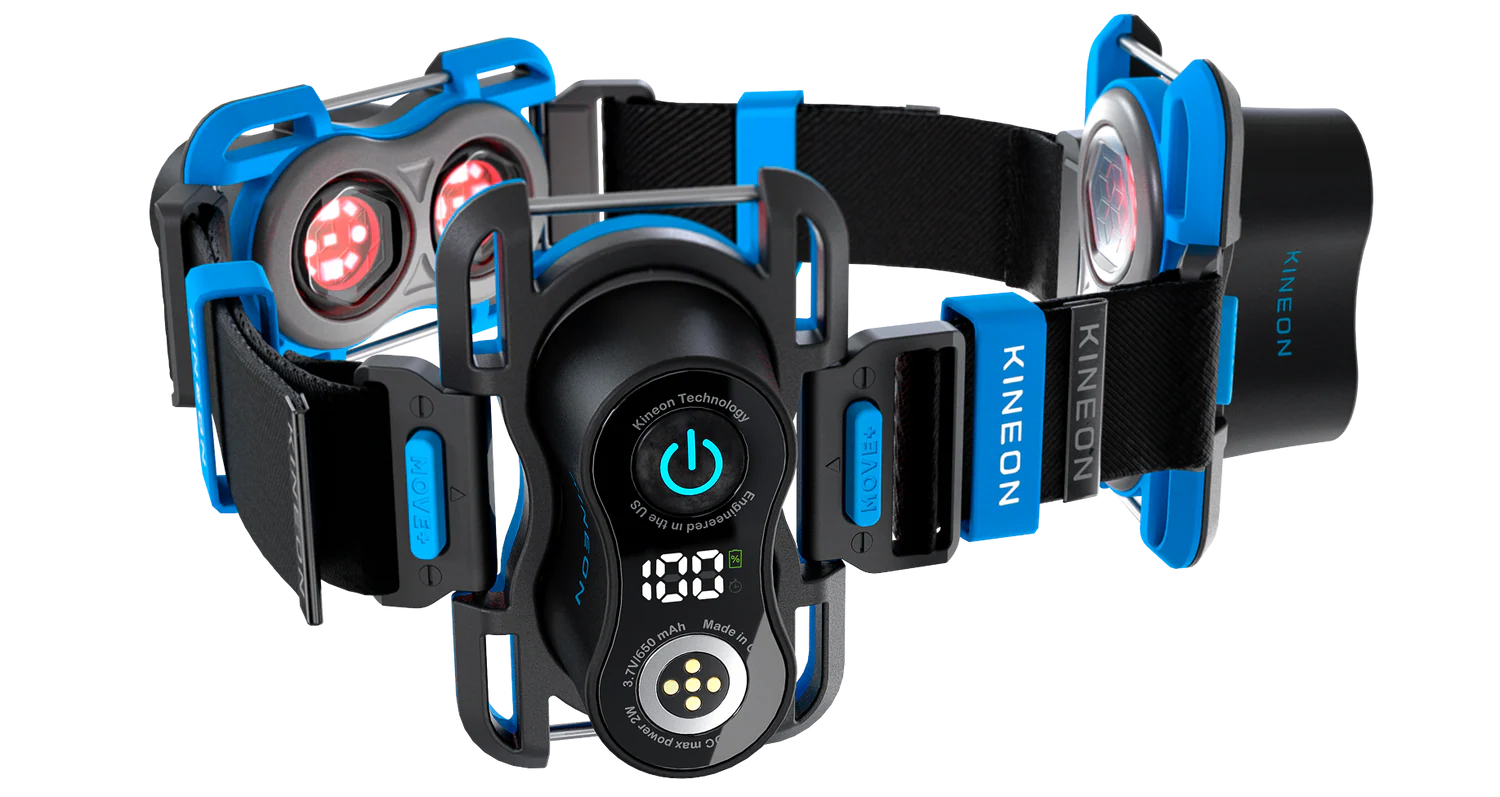
Targeted contact device (like the MOVE+): Driving light into one specific joint or tendon, small coverage area — not built for whole-body |
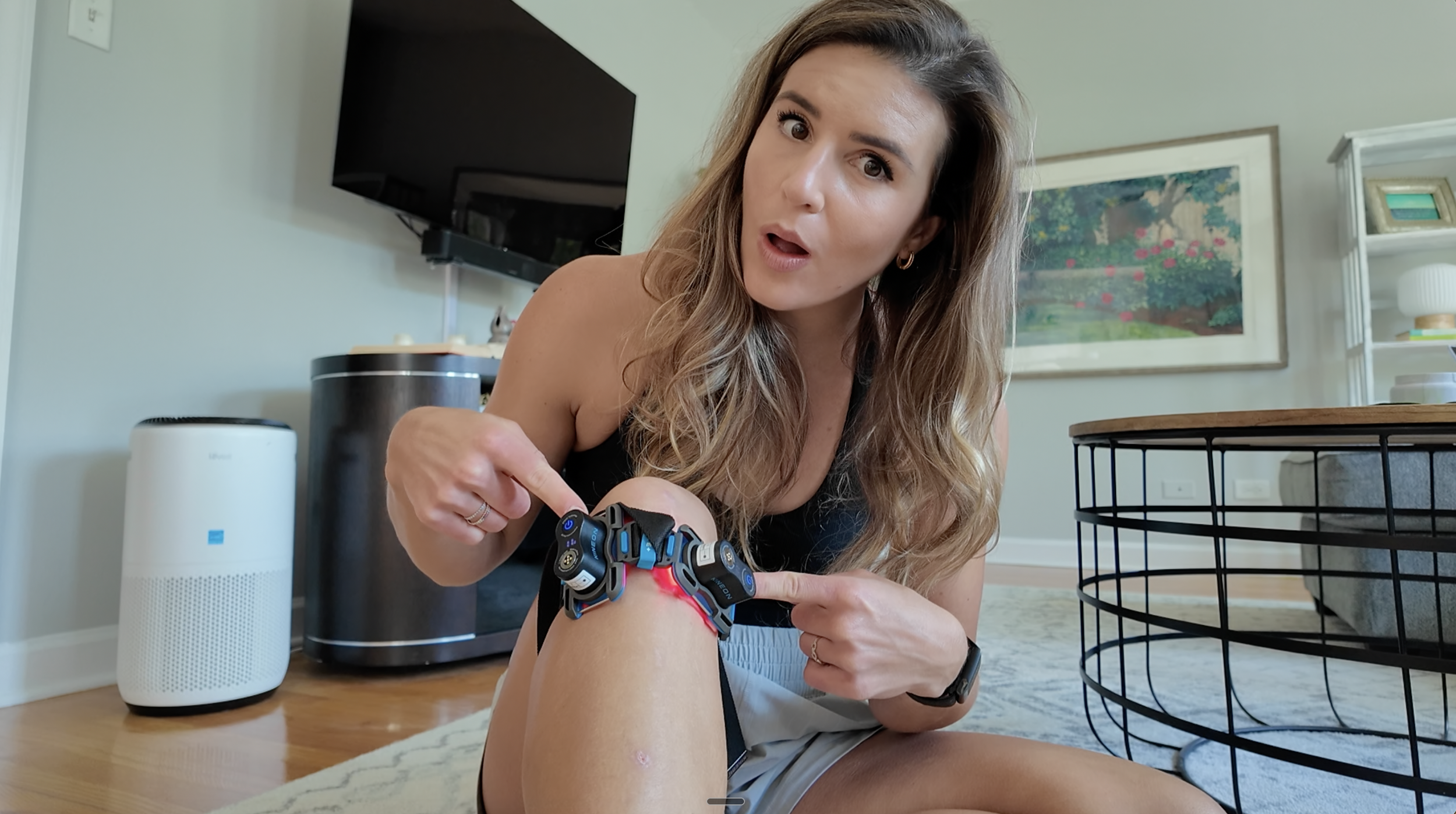
The MOVE+ is the targeted option: it combines medical-grade lasers and LEDs, and you clamp it directly onto the spot and tighten it down. That pressure isn't only about staying put — keeping the device in firm, consistent contact matters because of simple physics. The blood and water in your tissue absorb and scatter light. Fewer things in the way means more light actually reaches the tissue underneath. That's the whole design logic, and it's why I reach for it on a joint or tendon instead of a panel.
The honest buying rule — match the tool to the target
Whole-body or large skin areas, plus convenience? Get a panel.
Cover a whole limb or your back on a budget? Get a wrap.
Drive light into one specific joint or tendon? A targeted contact device like the MOVE+.
You don't need all three. You need the one that matches the job.
How I actually use the MOVE+
Here's how it shows up in my real week — not the highlight reel.
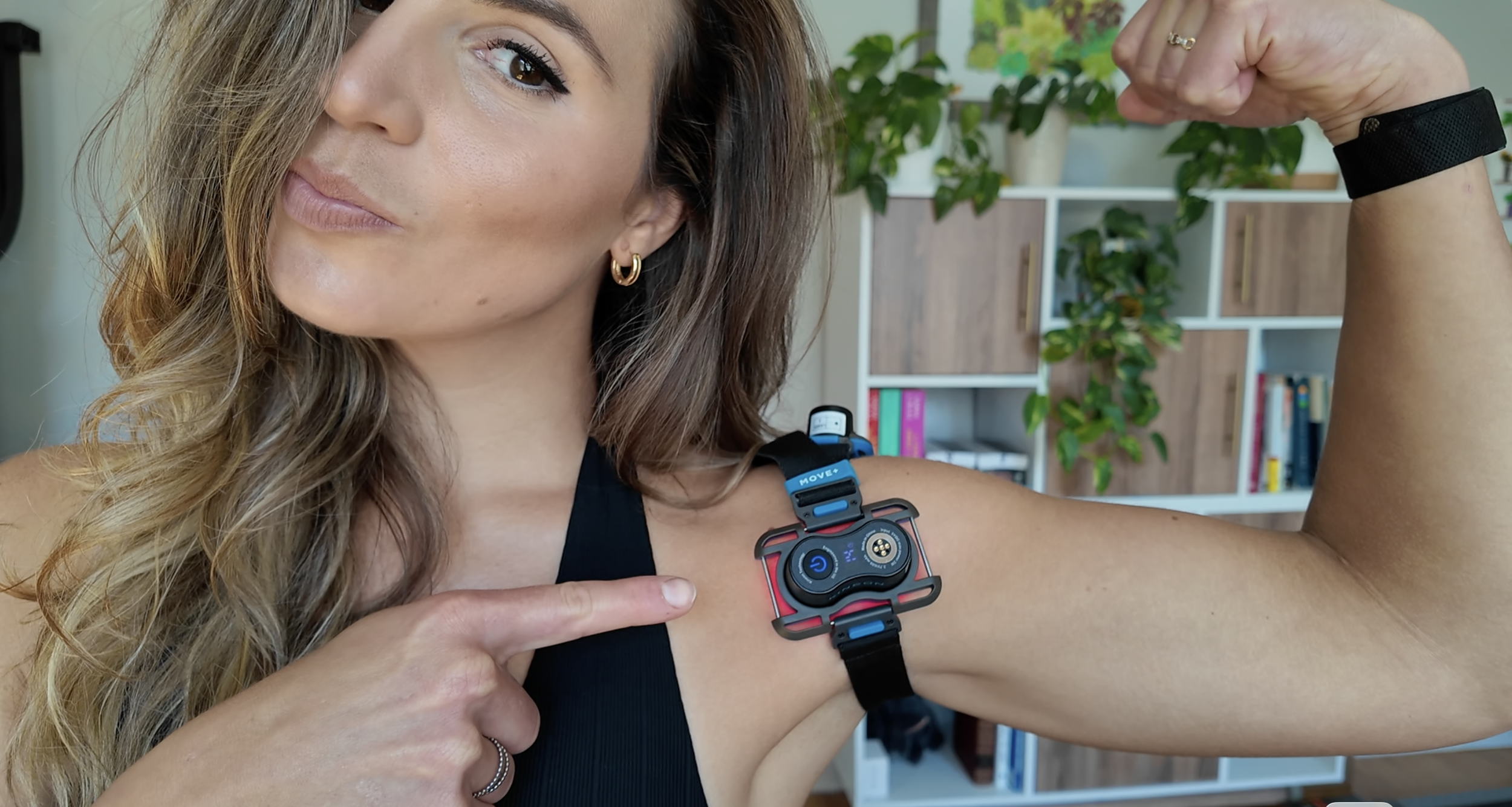
My ACL knee. When I stack too much training volume, the fat pad behind my kneecap gets inflamed and cranky — soft tissue and inflammation right at the surface of the joint, which is exactly what a snug contact device suits. I run it twice a day, 15 minutes a session, and it takes the edge off enough that I can keep training instead of backing all the way off. Not because it's healing my ligament — because it's calming the inflammation around it.
My neck. I place it around my scalenes when tension builds. It's muscular and near the surface, and it's become a genuine go-to when my neck locks up.
My low back, after volleyball. And the portability is the reason I actually use it — I've wrapped it around my quads on the drive home from the gym. That's how little friction there is.
As a warm-up. This one surprised me. I'll use it before training when I know a muscle or joint is about to get worked hard. I'm not claiming it boosts performance — but it helps the area feel ready before I load it, especially on days I walk in already a little sore.
Honest pros and cons
What I love: it's genuinely portable and lives in a little case. It's modular, so I reconfigure it for different body parts. The charge case keeps it topped up between sessions. The strap system stays put when I move — which, as we covered, is part of how it works, not just convenience. And it's hands-free, so I use it while I work or drive.
The cons, because there always are some: the beeping and buzzing when it powers on and off is a little jarring, especially near my ears on my neck. Minor, but real. Early on I also wished it ran warmer — I associate "working" with heat. That's a misconception on my part: with this kind of light therapy, the effect comes from the light reaching the tissue, not from surface heat. Worth knowing if you expect a heating-pad feeling. And the honest elephant in the room: it's around $500. That's a real number.
FAQ: Red light therapy for joint pain
Does red light therapy actually work for joint pain?
The evidence is strongest for tendon pain, where it can help reduce pain and improve function as an add-on to strengthening work. For general soreness and inflammation it may help, though results are mixed and depend on dose and consistency. It works best as a supportive tool, not a standalone cure.
How long does it take to see results from red light therapy?
Most recovery tools, this one included, reward consistency over weeks — not a single session. I'd commit to daily use for at least a few weeks before judging whether it's helping. Skipping days is the fastest way to conclude "it doesn't work" when you never really gave it a fair test.
Can red light therapy heal a torn ligament or ACL?
No. The human evidence for light actually healing deep ligament tissue is thin, and a fully torn ligament is a surgical repair conversation. What it may help with is calming inflammation and supporting the soft tissue around a joint during recovery — not repairing the ligament itself.
Is a red light panel or a targeted device better?
It depends on your target. Panels are best for whole-body and large surface areas. Targeted contact devices like the MOVE+ are better for driving light into one specific joint or tendon, because direct, consistent skin contact gets more light to the tissue underneath. Match the tool to the job.
Do you feel heat during red light therapy?
Not really, and that's by design. The benefit comes from the light reaching the tissue, not from surface warmth. If you're expecting a heating-pad sensation, you won't get it — and that doesn't mean it isn't working.
If a nagging injury is running your training
If you're an active adult trying to stay strong while managing a spot that keeps flaring — icing, resting, buying gadgets, and still not sure whether you're actually making progress — that's exactly the situation I coach people through. A device can calm a flare; a plan is what keeps you training. If you want a second set of eyes on yours, you can book a free discovery call here.
The Bottom Line
Red light therapy for joint pain is a legit adjunct — best supported for tendon pain, promising for inflammation, genuinely mixed for muscle soreness, and not a fix for torn ligaments or worn-down joints. The Kineon MOVE+ is the targeted, contact-based version of that tool, and after three months I reach for it twice a day.
Buy it if you've got a specific, nagging soft-tissue spot, you're realistic that it calms things down rather than curing them, and you'll actually use it consistently. Skip it if you want whole-body coverage (a panel or wrap makes more sense for less), or you're expecting it to heal a full tear or reverse arthritis. No device does that.
If you want to try it, here's my link, code VICTORIA gets you 10% off, and it's backed by a 30-day money-back guarantee — so you can test it risk-free and send it back if it's not for you. My one ask: commit to using it daily for a few weeks before you decide.
The one action to take: pick the right tool for your target first — panel, wrap, or targeted — then commit to using it consistently. The best recovery device is the one you'll actually reach for.
Related Articles
I Took Creatine Every Day for 365 Days — Here's What Actually Happened
The Over-Optimization Trap: When Health Tracking Starts Working Against You
Does Red Light Therapy Really Work? My Honest Review of the Fringe Red Light Therapy Wrap
This article is sponsored by Kineon and contains affiliate links. If you purchase through my links, I may earn a small commission at no extra cost to you. The sponsorship did not influence my assessment — I only recommend products I actually use and that meet my evidence-based quality standards.
This article is for educational purposes and is not a substitute for professional medical advice. I am a health coach, not a physician. Consult your healthcare provider before starting any new therapy, especially for a structural injury or existing condition.