My Favorite Health & Wellness Finds of 2025: Game-Changing Tools for Mind & Body
Most holiday gift guides are just glorified Amazon affiliate dumps featuring whatever's trending this week. This isn't that.
As a health coach who actually tests this stuff—and whose job depends on knowing what works versus what's marketing nonsense—I'm giving you the straight truth about health and fitness gifts worth your money.
Here's what you'll find: evidence-based recommendations organized by recipient type, budget transparency (because a $2,000 walking treadmill isn't for everyone), and honest takes on when you should skip popular products entirely.
Quick Navigation:
🏃♀️ For the Injury Recovery Warrior
Perfect for: ACL surgery recovery, knee rehab, athletes returning to sport, anyone dealing with chronic joint pain
1) Fringe Red Light Therapy Wrap ($229-$399)

What it is: A wireless, medical-grade LED wrap combining 660nm red light and 850nm near-infrared light for targeted recovery.
Why it's worth it: Red light therapy isn't just anecdotal—it's backed by hundreds of studies showing it can reduce inflammation, improve blood flow, and support tissue healing. The Fringe wrap specifically uses clinically-supported wavelengths at the right intensity (20-40 mW/cm²) without overheating tissue.
I've been using mine consistently for knee recovery work, and the relief builds over time. It's not magic—it's physics. The photons stimulate mitochondrial ATP production, which your cells need for repair.
Who should skip it: If you're looking for instant pain relief, this isn't it. Results accumulate with consistent 20-minute sessions over weeks, not overnight miracles.
Budget: $229 (regular wrap) to $399 (extra-long wrap)
🔥 Holiday Deal Alert: From November 17–30 (midnight PST), Fringe is offering 25% off sitewide — a perfect time to invest in your wellness routine or grab a thoughtful gift for someone you love.
2. ATG (Knees Over Toes Guy) Training Programs (Starting at $49/month)
What it is: Ben Patrick's progressive knee strengthening and mobility system, designed to bulletproof joints.
Why it's worth it: If someone's recovering from ACL surgery or dealing with chronic knee issues, ATG's systematic approach to tibialis raises, backward walking, and Patrick step exercises actually addresses the root biomechanical issues—not just symptoms.
The programs scale from complete beginners to advanced athletes, making them accessible regardless of current ability level.
Who should skip it: People who won't actually follow a structured program. This requires consistency, not occasional dabbling.
Budget: $49/month for app access
3. Restek Neck Massager ($70 on Amazon)
What it is: Handheld percussion massager for targeted muscle release.
Long days at your desk or intense workouts call for some self-care. The RESTECK Massager delivers deep kneading relief for your neck, shoulders, and back, with optional heat that feels amazing.
It’s portable, easy to use, and makes a perfect gift for anyone who’s constantly on the go or dealing with tight muscles.
Why it's worth it: Simple, effective, and affordable. For someone dealing with neck tension from desk work or post-injury compensations, this provides targeted relief without breaking the bank. It's not as powerful as a Theragun, but at a fraction of the cost, it's a solid entry-level option.
Budget: ~$70


🏋🏻♀️ For the Home Gym Builder
Perfect for: Space-conscious athletes, apartment dwellers, anyone who wants commercial gym results at home
1. Freak Athlete Hyper Pro ($799 + optional attachments)

What it is: An 11-in-1 machine that handles Nordic curls, back extensions, GHDs, reverse hypers, hip thrusts, sit-ups, leg extensions, hamstring curls, and upper body work—all in 2 square feet of storage space.
Why it's worth it: This single piece replaces $5,000+ worth of gym equipment. For anyone serious about posterior chain development (critical for injury prevention and athletic performance), this is the most space-efficient solution on the market.
The build quality is commercial-grade, with a 500-pound weight capacity and lifetime warranty. It stores vertically when not in use, making it perfect for garage gyms or small spaces.
Who should skip it: Complete beginners who haven't established a consistent training habit yet. Start with basics before investing at this level.
Budget: $799 (base unit), add $299-399 for leg developer or other attachments


What it is: Specialized equipment for tibialis anterior training—the often-neglected front shin muscle crucial for knee health.
Why it's worth it: Weak tibialis muscles contribute to knee pain, shin splints, and ACL injury risk. These tools make it easy to strengthen an area most people never train effectively. Check out my full review of their latest product, the SledTred.
Budget: Varies by specific equipment
3. Resistance Bands Set ($20-40)
What it is: Multi-resistance band pack for variable tension training.
Why it's worth it: The most versatile piece of home gym equipment, period. Use them for warmups, accessory work, rehab exercises, or full workouts when traveling. Look for sets that include door anchors and handles for maximum exercise variety.
Budget: $20-40 for quality set
🍳 For the Kitchen Performance Optimizer
Perfect for: Meal preppers, anyone trying to dial in nutrition, people who want healthy eating to be effortless
1.Zojirushi Neuro Fuzzy Rice Cooker ($229-280)
What it is: A "smart" rice cooker that uses fuzzy logic technology to adjust cooking parameters automatically.
Why it's worth it: Perfect rice every time matters more than you think for consistent meal prep. This thing cooks rice, oatmeal, porridge, and even steams vegetables. For someone who eats rice regularly (a staple for athletes and active people), this eliminates a variable in meal consistency.
It's absurdly expensive for a rice cooker, yes. But it's also a 10+ year investment that makes a weekly staple completely foolproof.
Who should skip it: People who rarely eat grains or aren't bothered by stovetop rice cooking.
Budget: $190-280 depending on size
2. Ninja Creami ($179-249)
What it is: A machine that turns frozen bases into ice cream, gelato, smoothie bowls, and protein shakes with the texture of soft-serve.
Why it's worth it: For anyone trying to hit high protein targets while satisfying sweet cravings, this is a game-changer. Make protein ice cream that actually tastes good using simple ingredients you control. No weird additives, no mystery chemicals.
I use mine for post-workout protein fluff (frozen protein shake base blended to ice cream consistency). It's also great for making high-protein, lower-calorie desserts that don't taste like diet food.
Who should skip it: People who won't actually use it consistently. It requires freezing bases for 24 hours before processing.
Budget: $169-229 depending on model
3. Trade Coffee Subscription ($16-20/bag)
What it is: Personalized coffee subscription that matches you with small-batch roasters based on taste preferences.
Why it's worth it: For coffee enthusiasts who care about quality, Trade makes it easy to discover new roasters without the trial-and-error of ordering random bags. The matching algorithm actually works—you rate each bag and future selections improve.
Coffee quality matters if you're using it strategically for performance (which most active people do). Consistent, fresh-roasted beans make a noticeable difference.
Budget: ~$18 per bag on subscription

What it is: Water bottle with integrated filtration removing 99.99% of contaminants including lead, chlorine, and PFAS.
Why it's worth it: Hydration quality matters. For athletes and active people drinking 80-100+ oz daily, filtering out contaminants makes a difference in how you feel. This bottle makes it easy to get clean water anywhere—tap water at the gym, water fountains, even questionable sources when traveling.
Budget: ~$35
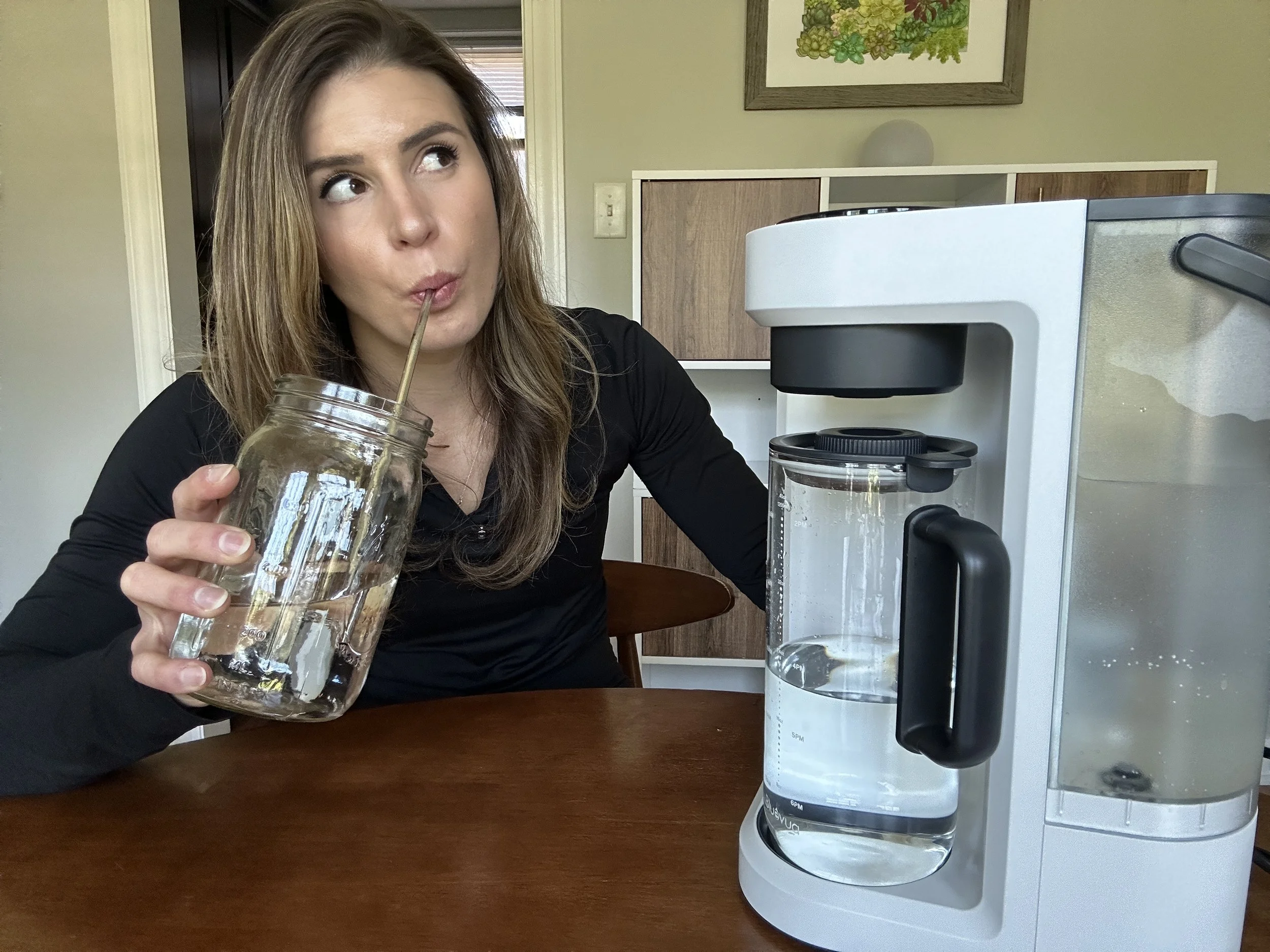
What it is: Countertop reverse osmosis water purification system removing 99.9% of contaminants including heavy metals, fluoride, chlorine, and PFAS.
Why it's worth it: For home offices or kitchens where you're filling water bottles multiple times daily, having truly clean water matters. RO filtration is the gold standard—it removes virtually everything except pure H2O (though you'll want to remineralize).
This specific model requires no installation (just plug it in), filters up to 5 gallons daily, and saves money versus buying bottled water long-term.
Budget: ~$350
💤 For the Recovery & Sleep Enthusiast
Perfect for: Overtrained athletes, people struggling with sleep, anyone who takes recovery seriously
1.Muse S Athena Headband ($345- $570 - with year premium subscription)

What it is: An EEG-equipped headband that provides real-time biofeedback during meditation and tracks sleep quality through brainwave analysis.
Why it's worth it: The Muse S tracks brain activity, heart rate, and breathing to help you achieve deeper meditation states, and its sleep tracking provides comprehensive analysis of sleep stages. For people who struggle to "turn off" their brain, having objective feedback makes meditation less frustrating and more effective.
The newer Athena model includes functional near-infrared spectroscopy (fNIRS) sensors for even more detailed brain activity monitoring.
The honest truth: At $475 plus annual subscription, this is expensive. For what Muse offers, it's hard to justify its nearly $400 price tag unless you're genuinely curious about what's happening inside your body during meditation and sleep. But if biofeedback is what finally makes meditation "click" for someone, that's priceless.
Who should skip it: Anyone who meditates fine without tech assistance, or people unwilling to commit to daily practice.
Budget: $475 + $100/year premium
⌚️ For the Wellness Data Tracker
Perfect for: Biohackers, data-driven athletes, people who want objective health metrics
1.WHOOP Strap ($149-330/yr)
What it is: 24/7 recovery and strain tracking focused on heart rate variability, sleep quality, and training readiness.
Why it's worth it: WHOOP excels at one thing: telling you when to push hard and when to back off. The strain-recovery-sleep loop helps prevent overtraining and optimizes training timing. For serious athletes, this data prevents injury and maximizes adaptation.
Unlike step counters or calorie trackers, WHOOP focuses on recovery metrics that actually impact performance decisions.
Who should skip it: Casual exercisers who won't adjust training based on data, or people annoyed by subscription models.
Budget: $199-359/year depending on membership
2. Garmin Fitness Watches ($200-1000+)
What it is: GPS-enabled fitness watches with comprehensive activity tracking, training metrics, and health monitoring.
Why it's worth it: Garmin dominates the serious athlete market for good reason—their training load algorithms, VO2 max estimates, and recovery metrics are industry-leading. Unlike Apple Watch (fitness features as an afterthought), Garmin prioritizes athletic performance tracking.
For runners, cyclists, and multi-sport athletes, the navigation features and detailed performance analytics justify the investment.
Budget: $200 (entry models) to $1000+ (flagship models)
3. Vitality Blueprint Lab Testing ($500-1250)
What it is: Comprehensive bloodwork panel (52-90+ biomarkers) with performance-focused analysis and personalized recommendations, co-founded by exercise physiologist Andy Galpin, PhD.
Why it's worth it: Vitality's platform uses robust lab analysis to objectively evaluate entire physiology through a performance lens and systematically target constraints and deficiencies. You're not just getting lab values—you get a "Vitality Score" that evaluates 13 functional areas and 8 performance areas with actionable lifestyle, nutrition, and supplement recommendations.
For high-performers who want to optimize beyond guesswork, this provides the data to make informed decisions about training, recovery, and supplementation. It's like having a performance nutritionist analyze your bloodwork specifically for athletic optimization.
Who should skip it: People who won't actually implement the recommendations, or those satisfied with standard annual physical bloodwork.
Budget: $399 (Standard - 52 biomarkers) to $699 (Elite - 90 biomarkers)
💼 For the Busy Professional
Perfect for: Executives, entrepreneurs, anyone working 50+ hour weeks who still wants to prioritize health
1. Egofit Under-Desk Treadmill ($299-399)

What it is: A compact walking treadmill (5% incline built-in) designed to fit under standing desks, max speed 3.1 mph.
Why it's worth it: The Egofit Walker is ideal for those who want to increase daily step count while working, with users reporting increased energy, higher daily step counts, more productivity, and better mood throughout the day. The 5% incline adds resistance without increasing speed, helping you burn more calories in less time.
For remote workers or anyone with a standing desk, this is the easiest way to hit 10,000+ steps daily without dedicating separate workout time. Walk during Zoom calls, while responding to emails, or while watching training videos.
The reality check: At $400, there are less expensive walking pad options on the market, and the Egofit only offers a one-year warranty, which is rather short for a motorized machine. But if you actually use it daily (and reviewers consistently do), the cost-per-use becomes negligible.
Who should skip it: People without standing desks or the space to use it, or those who prefer traditional cardio sessions.
Budget: $399-449 depending on model
2. Soundcore Earbuds ($40)
What it is: High-quality wireless earbuds with active noise cancellation to help you tune out the noise.
Why it's worth it: For gym use, you need earbuds that actually stay in during burpees and don't die mid-workout. Soundcore delivers premium sound quality and battery life at half the price of AirPods. Good audio makes workouts more enjoyable, which means more consistent training.
Budget: $80-130 depending on model
3. Ladder or ATG Workout Apps ($30-50/month)
What it is: Time-efficient, expert-designed workout programs you can do anywhere.
Why it's worth it: Busy professionals don't have time for 90-minute gym sessions. These apps provide 20-40 minute workouts designed by top coaches that actually move the needle. Ladder focuses on athletic performance with celebrity athlete programming; ATG specializes in joint health and longevity.
No guesswork, no wasted time, just effective training you can fit into tight schedules.
Budget: $30-99/month depending on program
💰 Budget-Friendly Wins Under $75
Not everyone has $400 to drop on a single gift. Here are evidence-based options that deliver value without the premium price tag:
Foam Roller ($28): Basic but effective for self-myofascial release
Resistance Bands Set ($20-40): Maximum versatility for minimal cost
Epic Water Bottle with Filter ($45-65): Clean hydration anywhere
Quality Yoga Mat ($15-21): Invest in one that doesn't slip or smell after three uses
Meal Prep Containers ($35-40): Glass or quality plastic, compartmentalized
Digital Food Scale ($10-40): Essential for anyone tracking nutrition
Lacrosse Ball ($10-15): Targeted trigger point release
Nutrivore Book (~$20): Evidence-based nutrition education by Dr. Sarah Ballantyne
✨ Premium Investments $300+
These are "investment pieces"—expensive, yes, but designed to last years and deliver ongoing value:
Muse S Athena Headband ($345 + subscription): Meditation & sleep optimization
EgoFit Treadmill ($249-399): Daily movement without dedicated workout time
Freak Athlete Hyper Pro ($799+): Complete posterior chain training system
High-End Garmin Watches ($200-1000): Serious athletic performance tracking
Vitality Blueprint Elite Testing ($500-1250): Comprehensive performance bloodwork analysis
🛑 What to Skip: Popular Gifts That Are Garbage
Holiday gift guides love featuring trendy nonsense. Here's what to avoid:
Ab Stimulator Belts
The claim: Build six-pack abs while watching TV!
The reality: These provide electrical muscle stimulation that might help with recovery, but they won't burn fat or build visible abs. Save your money and do actual core training.
"Detox" Tea Sets
The claim: Flush toxins and lose weight fast!
The reality: Your liver already detoxes your body. These are typically just expensive laxatives that cause temporary water weight loss and digestive distress. Not healthy, not sustainable, not worth it.
Waist Trainers / Sweat Belts
The claim: Trim your waistline by sweating more!
The reality: These just make you sweat more in one area, causing temporary water weight loss. They don't burn fat, can restrict breathing, and any "results" disappear as soon as you rehydrate.
Most Vibration Plate Machines
The claim: Burn calories and tone muscles through vibration!
The reality: While whole-body vibration has some evidence for specific rehabilitation contexts, these machines won't replace actual exercise or deliver the transformative results their marketing promises.
Single-Function Kitchen Gadgets
The problem: That avocado slicer, banana keeper, or egg separator takes up space and does what a knife already does. Avoid gimmicky single-use tools—invest in quality multi-purpose equipment instead.
How to Choose: The Decision Framework
Still overwhelmed? Use this framework:
1. Start with the person's actual goals
Recovery from injury → Red light therapy, ATG programs
Building home gym → Hyper Pro, resistance bands
Optimizing performance → WHOOP, Vitality Blueprint testing
Better sleep → Muse headband, red light therapy
More movement during work → Egofit walking pad
2. Consider their commitment level
Just starting out → Budget-friendly basics (bands, foam roller)
Established habit → Mid-range investments (Ninja Creami, quality rice cooker)
Serious about optimization → Premium tools (Hyper Pro, comprehensive bloodwork)
3. Factor in space constraints
Limited space → Walking pad, resistance bands, compact equipment
Home gym available → Hyper Pro with attachments
Apartment living → Noise-conscious options (resistance training over treadmills)
4. Budget honestly
Under $50 → Foam roller, resistance bands, water bottle
$50-200 → Ninja Creami, quality kitchen tools, entry fitness trackers
$200-500 → Walking pad, red light wrap, mid-range Garmin
$500+ → Hyper Pro, comprehensive bloodwork, Muse headband
Final Thoughts: Gift Giving That Actually Helps
The best health and fitness gifts aren't about impressing people with expensive gadgets. They're about removing friction from someone's health goals.
A $35 resistance band set someone actually uses beats a $500 piece of equipment collecting dust. A quality rice cooker that makes meal prep effortless delivers more value than trendy supplements they'll forget to take.
Focus on:
Removing obstacles (walking pad for desk workers who "don't have time")
Adding convenience (Ninja Creami for protein goals, quality water filtration)
Providing data (Vitality Blueprint for people who want objective metrics)
Supporting recovery (red light therapy for injury warriors)
And when in doubt? A simple resistance band set and a copy of Nutrivore will serve most people better than 90% of the trendy fitness gifts flooding your feed right now.
Want Personalized Health Optimization?
These tools are great, but they're just tools. If someone on your list would benefit from expert guidance on training, nutrition, and sustainable health optimization, a coaching discovery call might be the most valuable gift you could give.
Book a free discovery call to learn about Be Victorious Coaching's evidence-based approach to health transformation—or grab a gift certificate for someone ready to invest in their health in 2025.
Affiliate Disclosure: This article contains affiliate links. If you purchase through these links, I may earn a small commission at no additional cost to you. I only recommend products I've personally vetted and believe benefit my readers based on evidence and real-world testing. My recommendations are driven by quality and effectiveness, not commission rates.
About the Author: Victoria Dorsano is a health coach specializing in evidence-based nutrition, athletic performance, and injury recovery. She's particularly known for her work with ACL recovery athletes and busy professionals seeking sustainable health optimization. Learn more at Be Victorious Coaching.