How to Fall Asleep Fast: What Took Me From 60 Minutes to 10
This blog is based on a video from my YouTube channel. Prefer to watch? Click here.
Sponsorship disclosure: The SKG section of this post is sponsored by SKG, who provided the products and compensates me for featuring them. All opinions are my own, and the sleep results I describe are my personal experience.
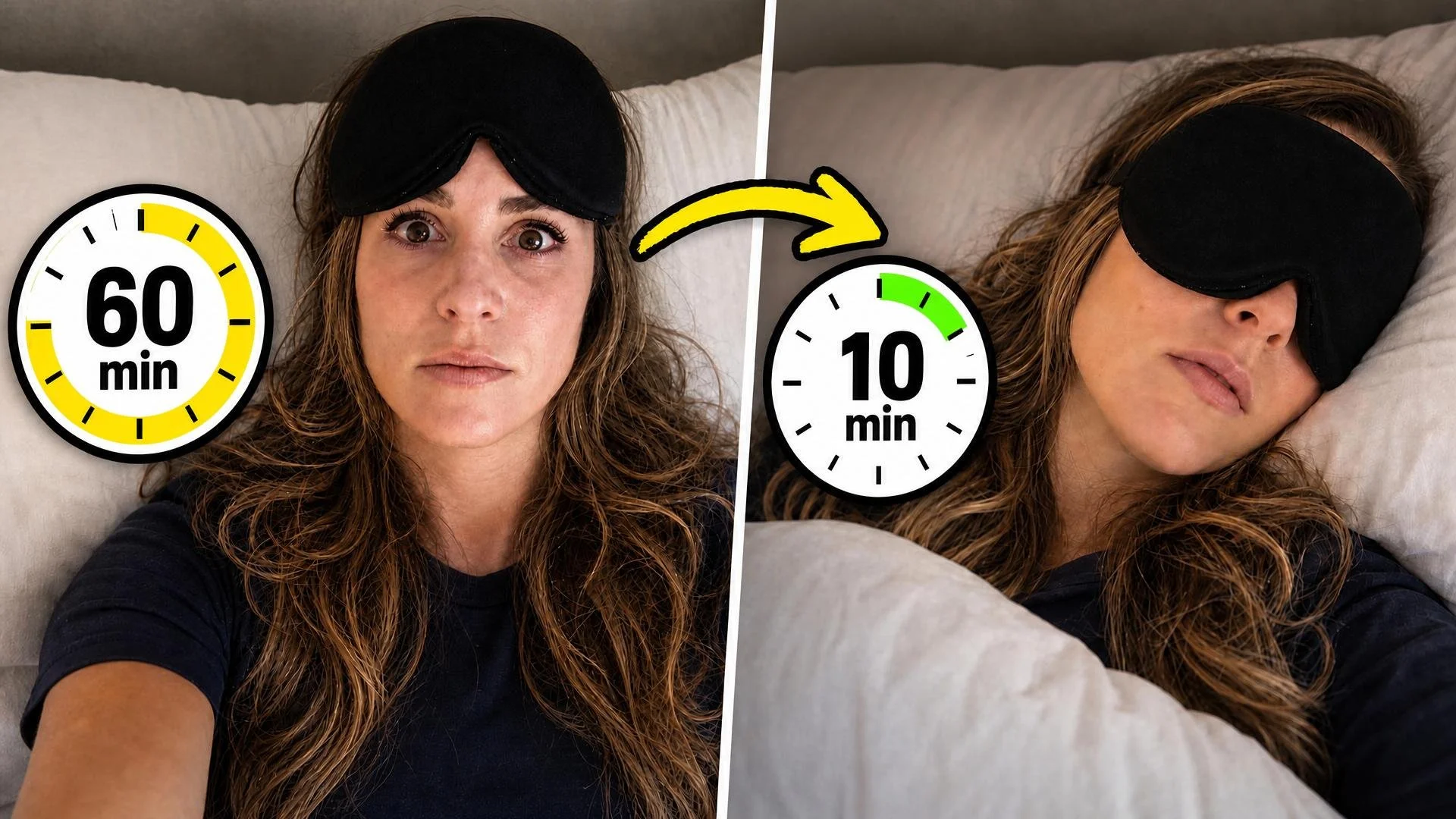
It used to take me 45 minutes to an hour to fall asleep. If I woke up at 2am, my mind started racing and that was the night.
Now I fall asleep in about 10 minutes, without sleep aids.
I'd love to tell you I found the right product. I didn't. I tried plenty of them: supplements, gummies, mouth tape, the viral mocktails, a "sleep stack" with more ingredients than my grocery list. Some of that can help some people. But none of it can fix a problem it isn't aimed at, and for most people who can't sleep, nobody ever figured out why they can't sleep.
What actually worked was a structured program built on CBT-I, and one piece of it sounds completely backwards. I'll get to that last.
Why one sleep fix rarely works
Sleep is multifactorial. It's your body, your mind, and your behavior, all at once. A single supplement or gadget only touches one of them.
I went through a structured CBT-I program. CBT-I is cognitive behavioral therapy for insomnia, and it's the first-line treatment recommended for chronic insomnia, including in the American College of Physicians guideline [VERIFY link]. The biggest lesson from it: diagnose before you treat.
So start with three questions:

Each runs on a different system, which is exactly why fixing one doesn't fix the others. I was all three. Let's figure out which one is you.
Step zero: set a real cutoff
One thing applies to all three, and it's the one busy people skip: you need a cutoff. For me that's dinner around 6 and work done by 6 or 7.
You can't go straight from your inbox to asleep. Work keeps your brain in problem-solving mode. A big meal close to bedtime keeps your digestion busy and makes reflux more likely right when your body wants to power down. A common guideline is to finish your last big meal two to three hours before bed.
Type 1: Mind wired (the racing brain)
This is the one most of you probably relate to: the to-do list, replaying a conversation, or (the big one for me) lying there worrying about not sleeping.
The goal is to lower what researchers call cognitive arousal, which really means giving your brain permission to stop problem-solving.
What helps:
Write a to-do list before bed. Five minutes. In a sleep-lab study out of Baylor (Scullin et al., 2018 [VERIFY link]), people who wrote a specific to-do list fell asleep faster than those who wrote about what they'd already done. Why it works: unfinished tasks nag at your working memory, and writing them down tells your brain they're handled.
Give your brain a boring job. Fiction, knitting, a puzzle, or a guided meditation track, with no screen. Your attention can only hold so much. Give it something neutral and there's less room for worry to loop.
But the biggest shift for me was mental. I learned I could get through a day on less sleep. One rough night isn't a catastrophe. Once I stopped panicking about it, the pressure came off, and that's when sleep got easier. It's a core part of CBT-I: trying hard to sleep backfires, because effort and worry keep you alert.
Here's the catch. You can calm your mind all you want, but if your body is still braced or in pain, you're not going anywhere.
Type 2: Body wired (tension and pain)
If your body is wired, your nervous system won't let you drift off. The goal is to shift from fight-or-flight toward rest-and-digest.
For me, a lot of this was pain. I've been in PT this year for neck and nerve pain, and my lower back takes a beating from volleyball. Lying in bed with a nagging ache is a guaranteed 45 minutes of staring at the ceiling.
First move: a warm shower or bath one to two hours before bed. A meta-analysis of 17 studies (Haghayegh et al., 2019 [VERIFY link]) found that even about 10 minutes of warm water can shorten how long it takes to fall asleep. Why it works: warm water pulls blood to your skin, so afterward your body sheds heat faster. That drop in core temperature is one of the signals your body uses to start sleep.
The three SKG devices in my wind-down routine
This section is sponsored by SKG. Here's how I actually use them, in the order I use them.
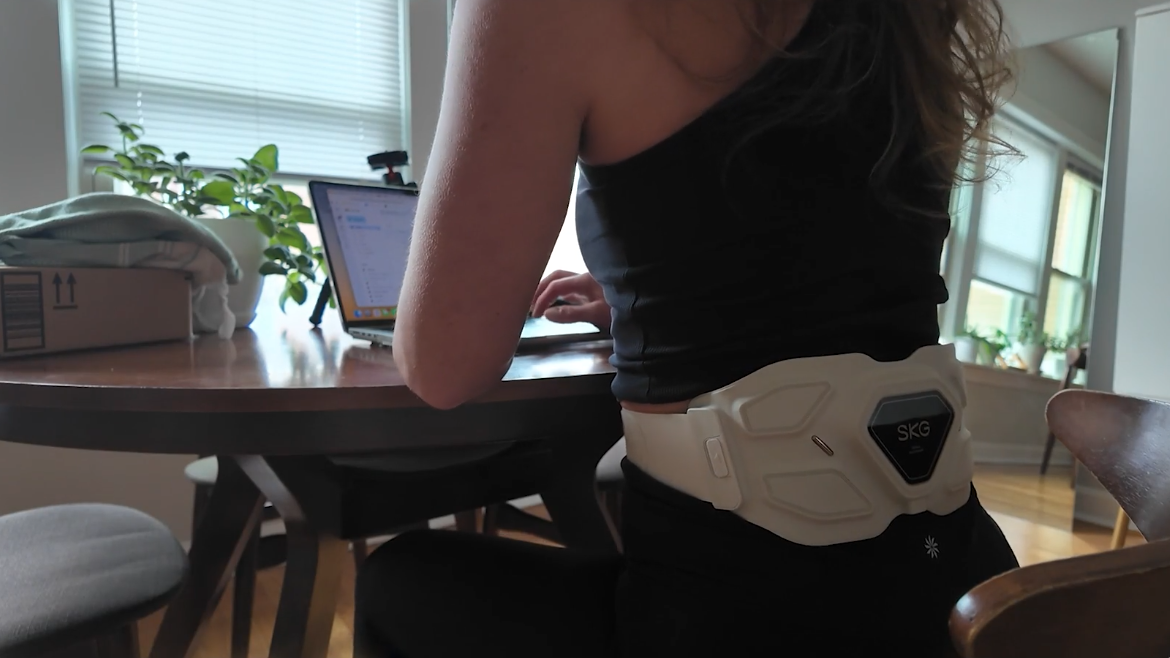
Step 1: SKG W9 Ultra Lower Back Massager (early evening, on the couch). After volleyball, my lower back, especially the left side, is usually tight and sore. The W9 Ultra combines kneading from eight titanium nodes, pulse stimulation, and heat with red and near-infrared light, and it's slim enough to wear under a shirt. I put it on and read, which covers my body step and my boring-job step at once. Same rule as the others: low pulse, and let the heat and kneading do the work. Check the W9 Ultra here.
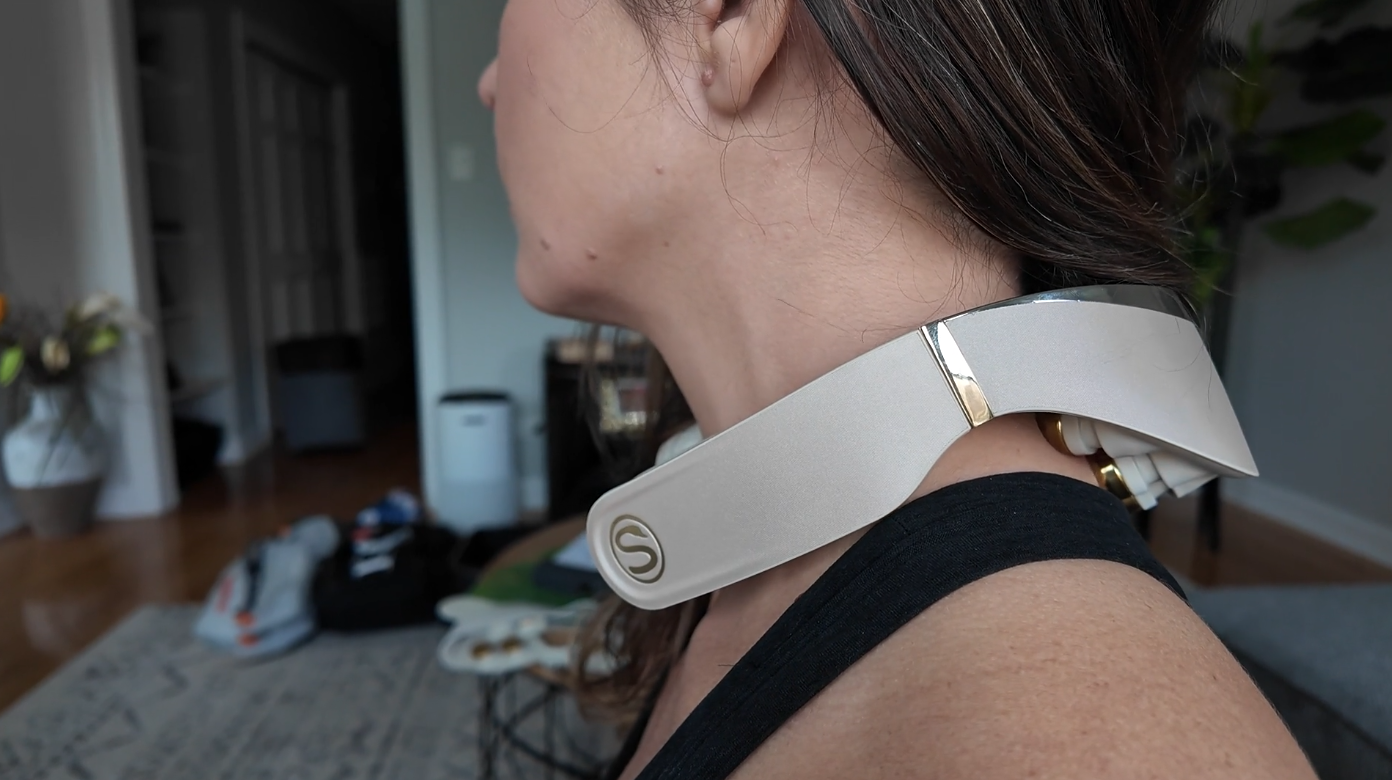
Step 2: SKG G7 Pro Fold Ti Neck Massager (on nights my neck flares). It uses TENS and EMS, the same types of electrical stimulation used in physical therapy clinics. TENS works on your sensory nerves to help turn down pain signals, and EMS gently contracts the muscles so they can release. The titanium heads heat up in about five seconds. At bedtime I keep the stimulation low. I'm trying to relax, not get a workout, so I let the heat do most of the work. It also folds down to about the size of a phone, so it travels with me. Check the G7 Pro Fold Ti here.

Step 3: SKG PS700 Neck & Shoulder Massager (lights off). This is the one I use most. Unlike the other two, it's purely physical kneading with no electrical stimulation. The heads are designed to mimic a hand working into deeper neck muscles, and it adds heat with near-infrared and red light.
What makes it a sleep tool for me is the built-in audio: over 100 tracks in the app, including soundscapes, guided breathing, and meditation, or you can connect your own music or audiobooks. It's quiet, and it shuts off on its own after 15 minutes, so if I drift off it takes care of itself. It works on body and mind at once. It's the "boring job" step and the body step in one. Check the PS700 here.
One honest note: none of these are sleep aids, and they won't knock you out. What they do for me is take pain and tension off the table so the rest of this routine can work.
Who should skip the electrical ones: if you have a pacemaker, a metal implant in your neck, or you're just sensitive to electrical stimulation, don't use TENS/EMS devices, and check with your clinician if you're unsure. The PS700 is the one to look at in that case, since it's purely mechanical.
Then: slow breathing
Once the tension is off, I do slow breathing with a long exhale. A longer exhale nudges your nervous system toward rest and brings your heart rate down. For me it's just easier once my neck and back have stopped yelling at me.
Type 3: Behavior (the one that sounds backwards)
This made the biggest difference for me. If you're lying in bed for hours, part of the problem might be that you're spending too much time in bed.
So I shortened my time in bed on purpose. I kept the exact same wake-up time every morning, weekends included, and went to bed later, so I was in bed about six hours. The first couple of weeks were rough. Here's what was happening:
Sleep pressure. Adenosine builds up in your brain the longer you're awake, and that's a big part of what makes you sleepy. Less time in bed means more of it by bedtime.
A fixed wake time anchors your internal clock, so your body starts expecting sleep at the same time every night.
Bed became linked with sleep again, not frustration, because I wasn't lying awake for hours.
Once I was falling asleep fast and sleeping through most of that window, I slowly expanded it, about 15 minutes at a time. That's how I went from lying awake for an hour to falling asleep in about 10 minutes.
Big caveat: please don't DIY this from a blog post or a YouTube video. This is called sleep restriction, and it's part of CBT-I for a reason. It's usually done with a clinician or a structured program. You will be sleepier at first, so be careful driving. It isn't appropriate for everyone, including people with bipolar disorder or seizure disorders. If this sounds like you, look for a CBT-I provider or program.
The fail-safe: what to do when you still can't sleep
If you're not asleep in about 20 minutes, or you wake up at 2am with your mind racing, get up. Keep the lights dim, do something boring, and go back to bed when you feel sleepy.
It sounds counterintuitive, but it teaches your brain that bed means sleep, not frustration. It's called stimulus control, and it's another core piece of CBT-I. This is what finally let me stop reaching for sleep aids.
Two quick bonuses:
Get outside light within about 30 minutes of waking. It's the strongest signal for setting your internal clock, which helps time when melatonin rises that night.
Keep your room dim and cool in the hour before bed. It helps melatonin rise and your core temperature drop.
Frequently asked questions
How can I fall asleep faster tonight?
Set a work and dinner cutoff, write a five-minute to-do list, and take a warm shower an hour or two before bed. If you're still awake after about 20 minutes, get up, keep the lights dim, and do something boring until you're sleepy. These address a wired mind, a wired body, and learned bed frustration.
What is CBT-I?
Cognitive behavioral therapy for insomnia is a structured program that targets the thoughts and habits keeping you awake. It's the first-line treatment sleep physicians recommend for chronic insomnia, and it includes stimulus control, sleep restriction, and cognitive techniques. It's usually delivered by a clinician or a structured program.
Why can't I fall asleep even when I'm tired?
Being tired isn't the same as being ready to sleep. A racing mind, a tense or painful body, or too many hours in bed can keep you alert even when you're exhausted. That's why figuring out which type of "wired" you are matters more than adding another product.
Is sleep restriction safe to try on my own?
I don't recommend it. It's a clinical CBT-I technique that makes you sleepier at first and isn't appropriate for everyone, including people with bipolar disorder or seizure disorders. Work with a CBT-I provider or structured program, and be careful driving early on.
Do massagers help you sleep?
They aren't sleep aids and won't knock you out. For me, they help by reducing neck and back pain and tension, so the rest of my routine can work. Avoid TENS/EMS devices if you have a pacemaker or metal implant in the treatment area.
Should I take supplements to fall asleep?
Some help some people, but a supplement can't fix a problem it isn't aimed at. Figure out whether your issue is mind, body, or behavior first, and talk to your clinician about anything you take regularly.
If this sounds uncomfortably familiar
If you read this and thought "I'm all three," you're not alone. I was too. The hard part isn't knowing the tips. It's diagnosing what's actually going on with your sleep and building a routine around your real schedule, your pain, and your stress.
That's exactly what I do in my coaching practice. Book a free discovery call here.
The Bottom Line
Most sleep problems aren't a missing ingredient. They're a mismatch between the fix and the cause. Work out whether you're mind wired, body wired, or behavior, and fix that one first. Set a cutoff, quiet your head, take the tension off your body, and if you're lying awake for hours, consider whether you're spending too much time in bed, ideally with a CBT-I provider.
Your one action tonight: pick your type, and start with that section only.
Which are you: mind, body, or behavior? Or all three, like me? Tell me in the comments on the video.
Related Articles
Why Can't I Fall Asleep? The 3 Things That Actually Control Your Sleep
SKG PS700 Review: Honest Take from a Chronic Neck Pain Sufferer
SKG G7 Pro Neck Massager Review: TENS + EMS + Red Light in One Device
SKG W9 Ultra Review: The Back Massager Belt That Actually Works (TENS + EMS + Red Light)
This post is sponsored by SKG. All opinions are my own, and the sleep results I describe are my personal experience.
This article contains affiliate links. If you purchase through my links, I may earn a small commission at no extra cost to you. I only recommend products I actually use and that meet my evidence-based quality standards.
This article is for educational purposes and is not a substitute for professional medical advice. I am a health coach, not a physician. Consult your healthcare provider before making changes to your diet, exercise, or supplement routine, especially with existing conditions or medications. Sleep restriction should not be done without guidance from a qualified professional. Do not use TENS/EMS devices if you have a pacemaker or metal implants in the treatment area.